
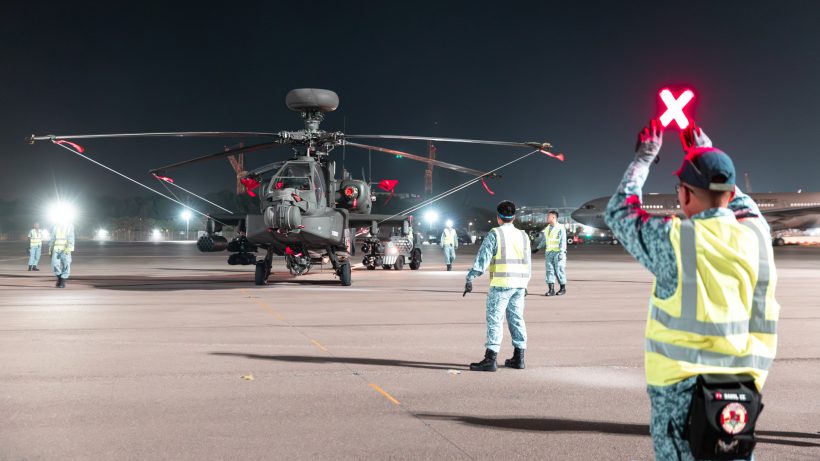
IN FOCUS | 30 PHOTOS
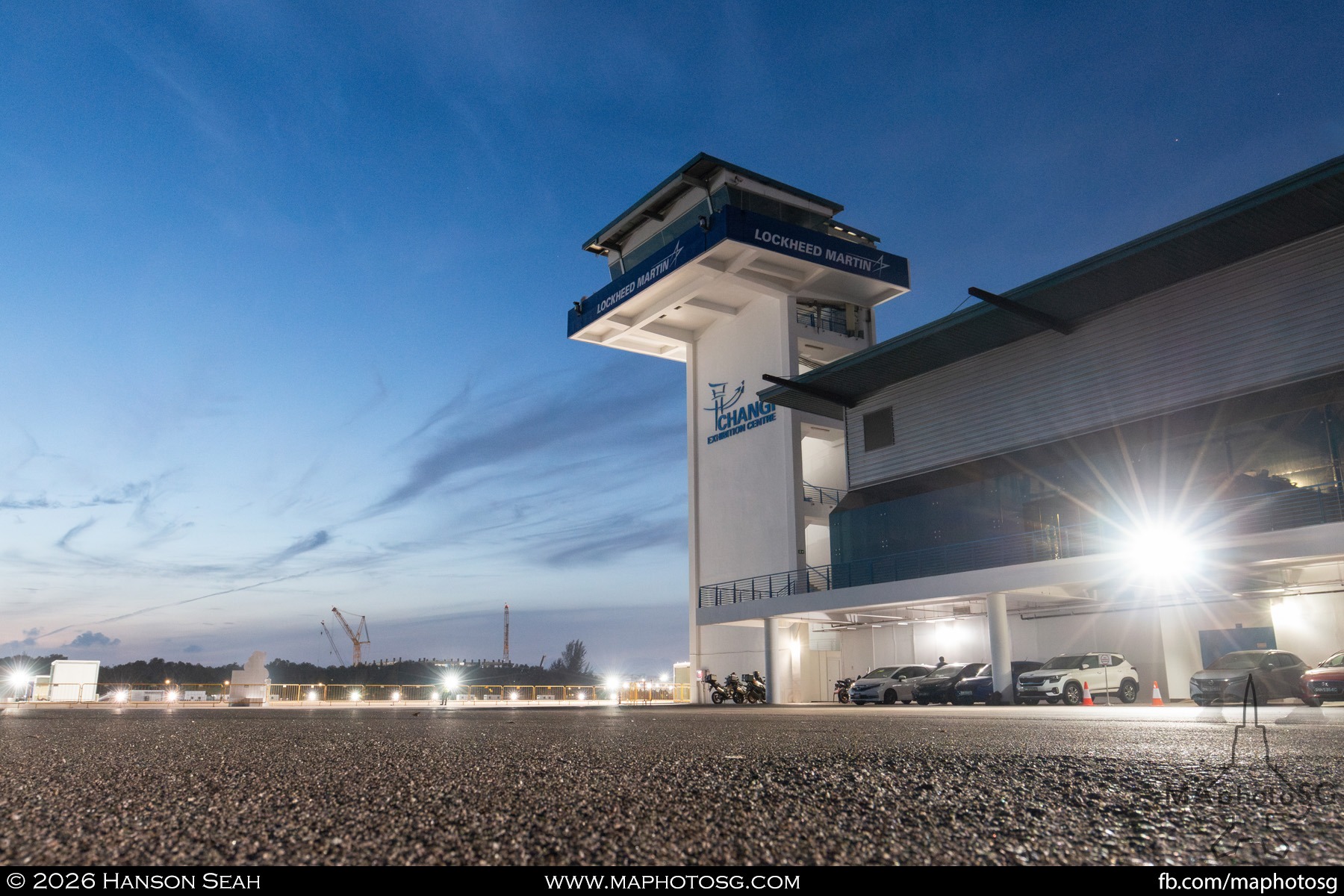
An empty Changi Exhibition Centre in the early hours of Monday, 26 January.
With the Singapore Airshow 2026 set to welcome its first visitors in less than a week, an impressive feat is taking place behind the scenes —while the stars are shining and most of the city is asleep. Unfolding during these quiet hours is the setup of the static display, also called the Static Asset Display Area (SADA): a time-consuming and demanding sequence of manoeuvres, often likened to a giant game of “Tetris”. This carefully choreographed process takes place over the week leading up to the airshow and marks the real beginning of every Singapore Airshow journey.
In the early hours of Monday, 26 January, at 0600hrs—eight days before the show’s opening—the Republic of Singapore Air Force (RSAF), fielding the largest lineup as the host nation air force, kickstarted preparations for its static display.
The day phase began with the arrival of rotary-wing assets: the CH-47F, AH-64D, H225M and S-70B, which flew in directly and required no towing. Ground crew immediately moved in to carry out post-arrival tasks, including servicing, draining fluids, and fitting protective covers to prepare the aircraft for prolonged static display. Once flying operations concluded, RSAF servicemen and women spent the remaining daylight hours marking position boxes and reference lines, critical guides that would later facilitate the night-time towing of static assets into their allocated spot.
Returning as night fell, the operation transitioned into its most distinctive phase. Unique to the Singapore Airshow, the show site at Changi Exhibition Centre lies outside the perimeter of the adjacent Changi Air Base (East), necessitating a complex towing operation to reposition aircraft from base to showground. As the route runs along the public Aviation Park Road, every movement must be meticulously planned and tightly controlled. Aircraft are towed at a walking pace of approximately 5 km/h in convoy, supported by police escorts, with wing-walkers positioned throughout to monitor clearances and ensure safety. These movements are conducted at odd hours to minimise disruption due to the sheer size, so road closures are scheduled nightly the week leading up to the airshow.
At 2100hrs, with the road closure fully enforced, RSAF personnel began a Foreign Object Debris (FOD) walk, clearing the 1 km stretch of road of plastic waste, rocks, metal nuts and other debris that could pose a hazard if run over or flung into aircraft engines. With the route swept by 0000hrs, towing commenced, and a convoy comprising the F-15SG, F-16C and A330 MRTT moved steadily towards the showground.
By 0100hrs, once the aircraft entered the static display area, the work was far from over, the most delicate phase of the operation just beginning. Within the tight confines of the SADA, RSAF personnel manoeuvred each aircraft into its final position with painstaking care. Achieving perfect alignment felt like a patient game of “Tetris”: wearing helmets and head torches, teams nudged aircraft forward in small increments through hand signals and verbal commands, stopped to recheck markings, and adjusted repeatedly until every asset is oriented precisely.
By 0200hrs, after 19 hours have elapsed, the work was finally complete. The RSAF section of the SADA stood perfectly presented. Behind the scenes, however, it was the result of meticulous planning, close teamwork and long hours of hard work—no mean feat, and one that unfolds almost entirely while Singapore sleeps.
Photo Gallery
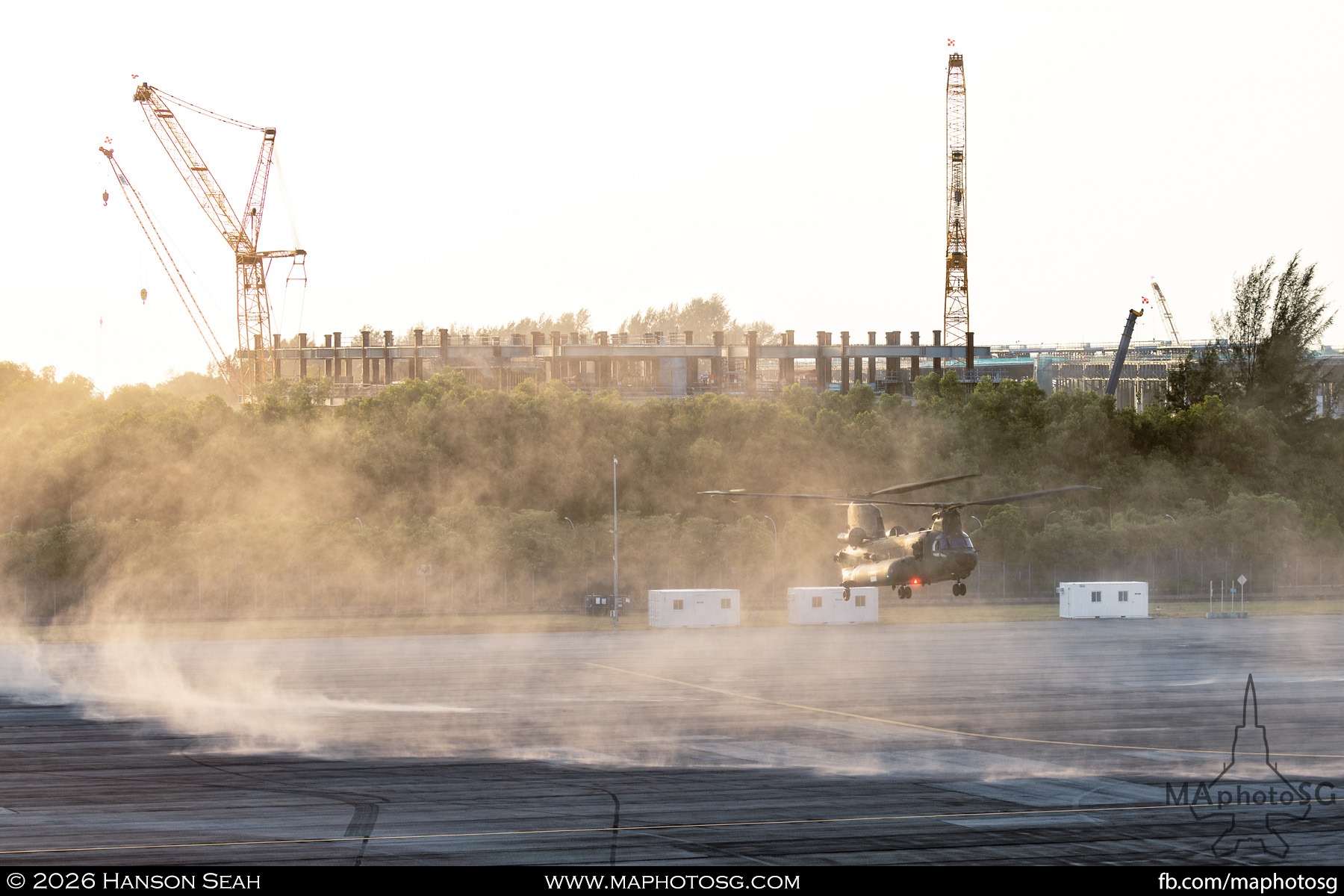
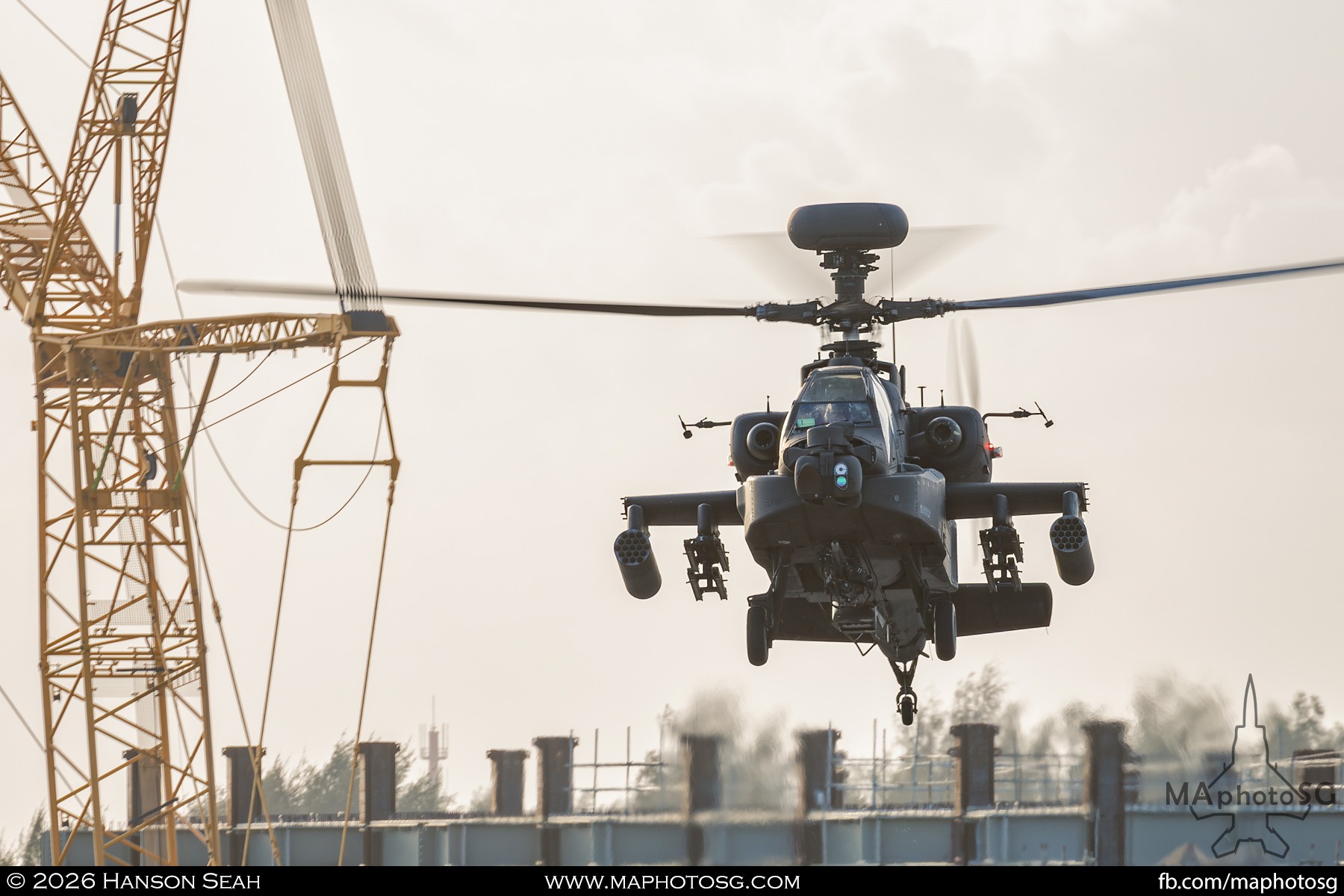
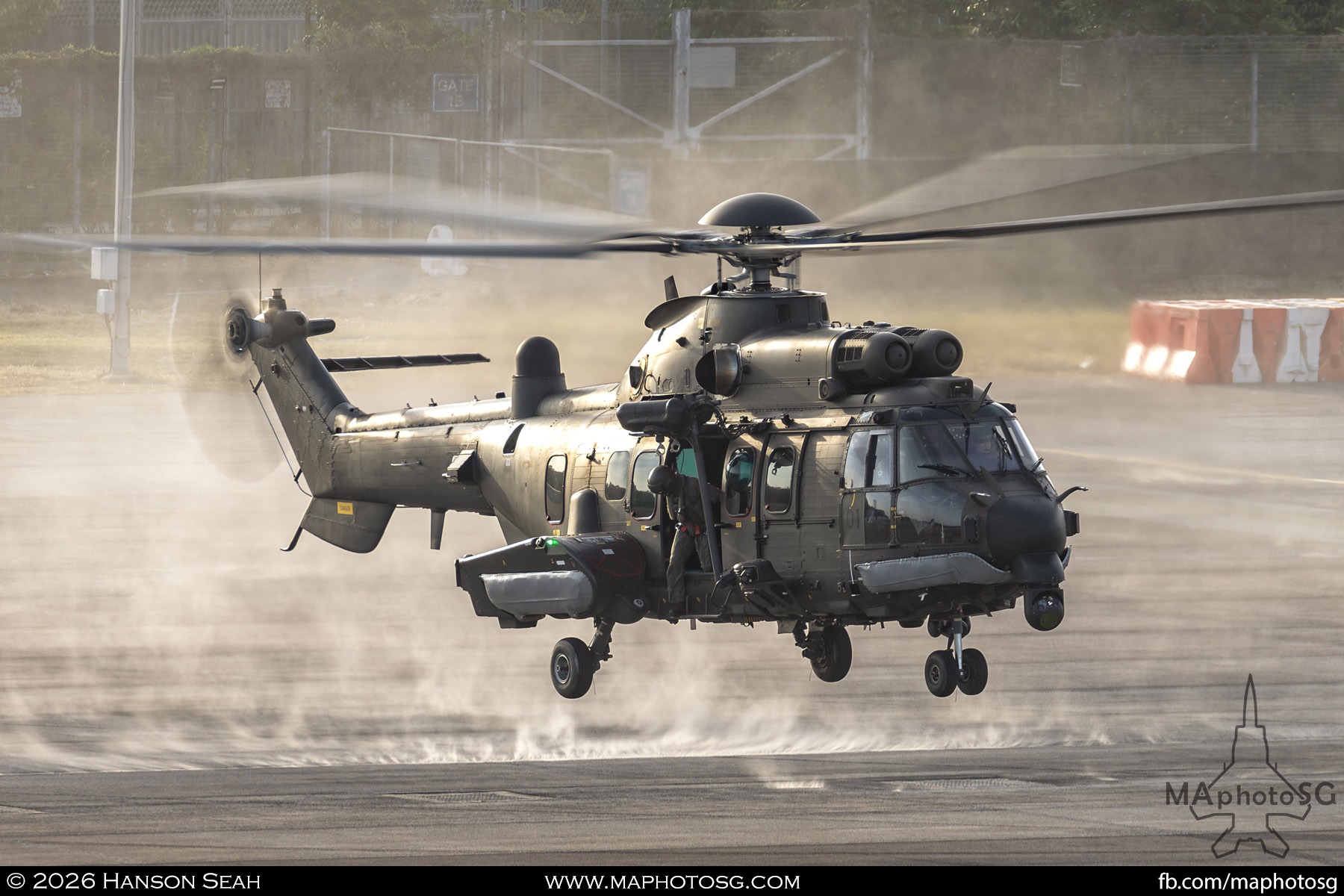
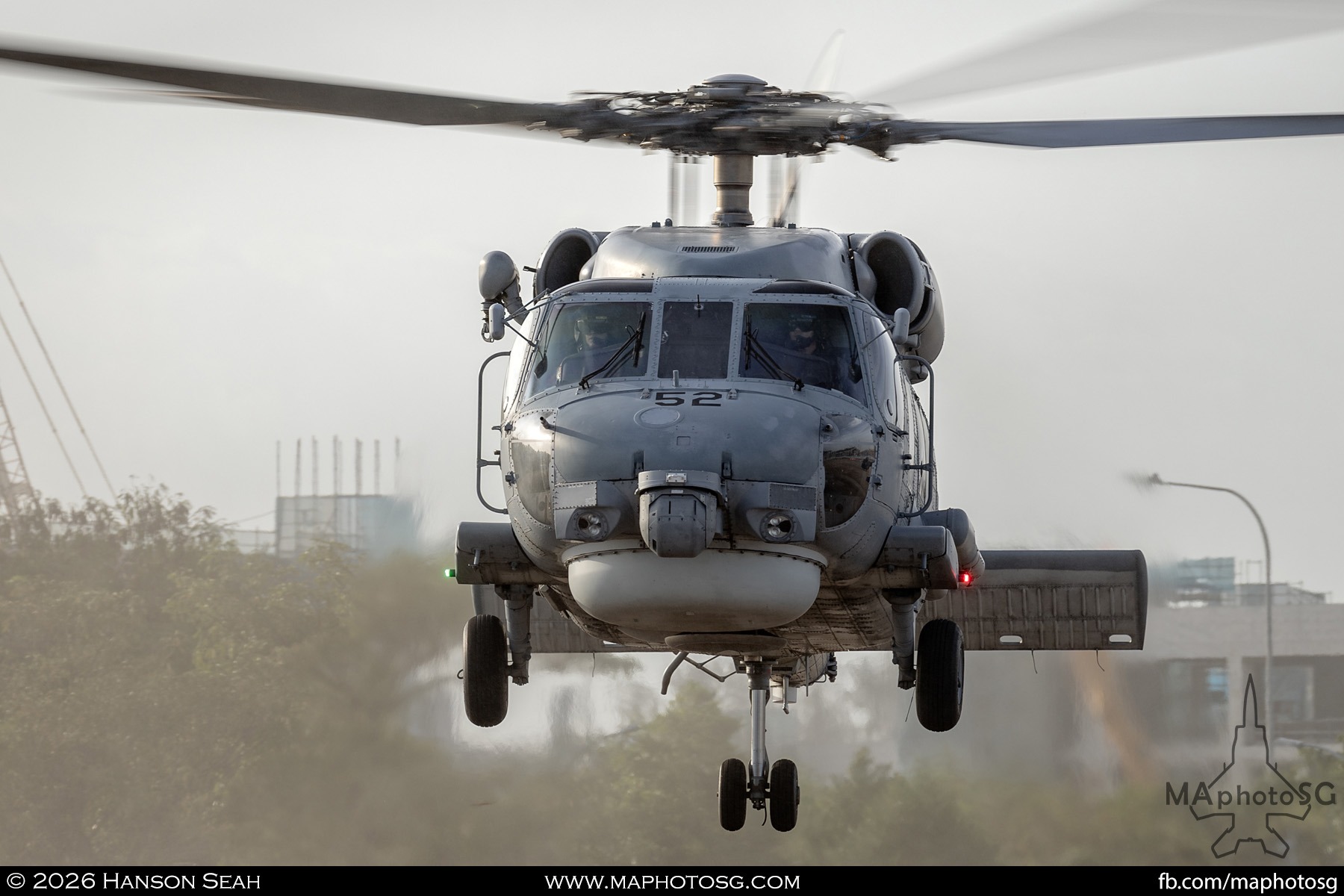
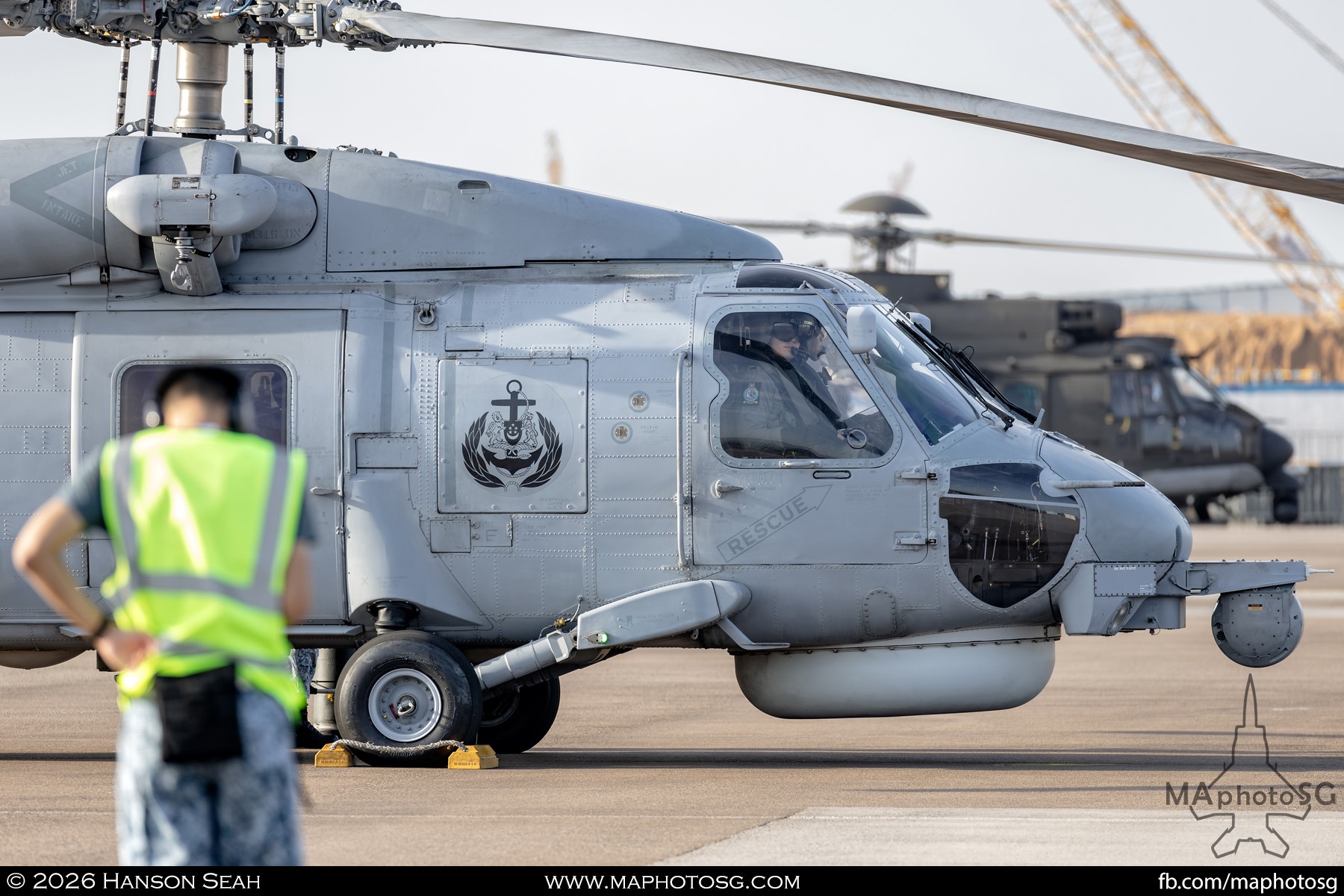
RSAF helicopters landing directly at the SADA. From top to bottom, left to right: CH-47F, AH-64D, H225M, and S-70B.
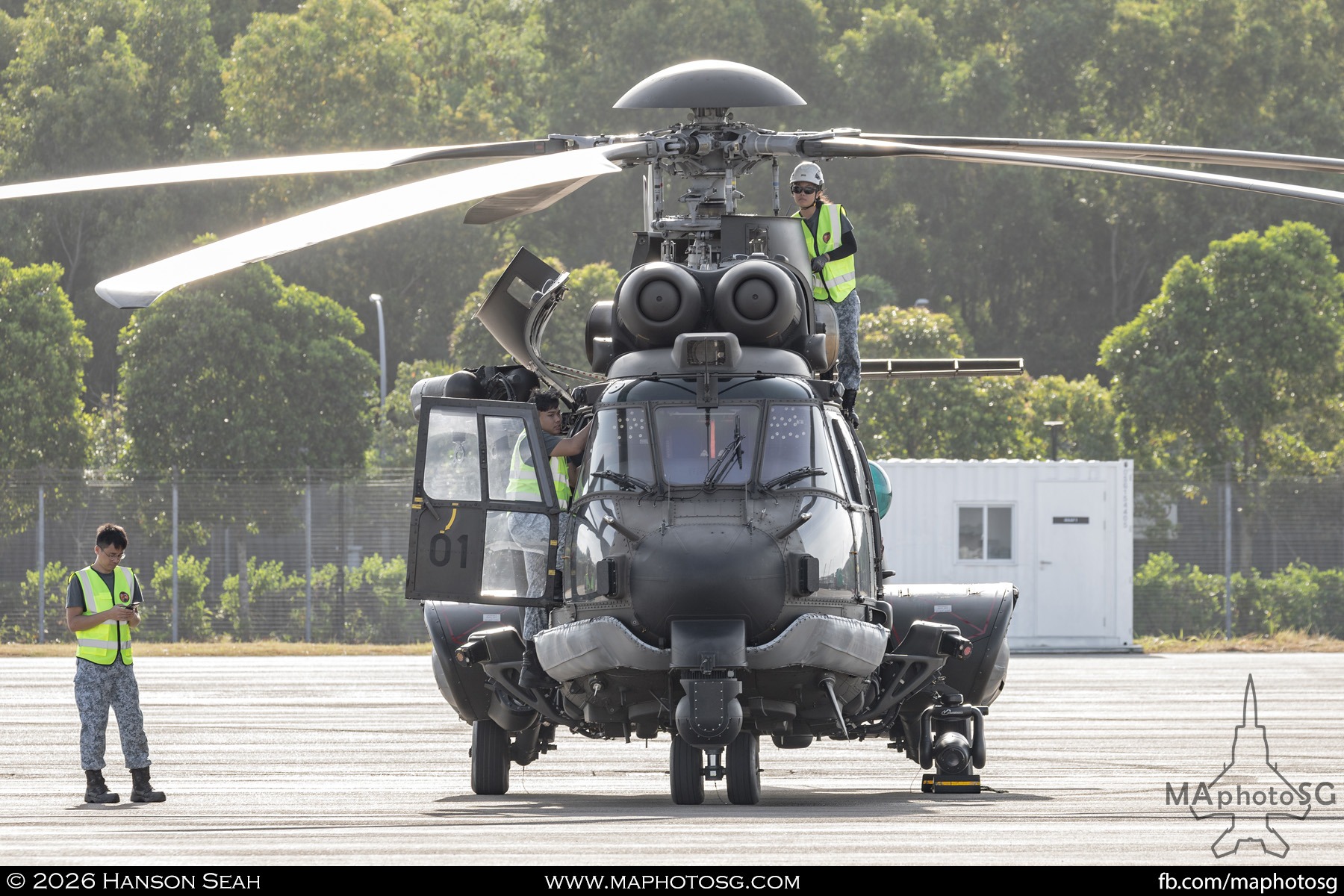
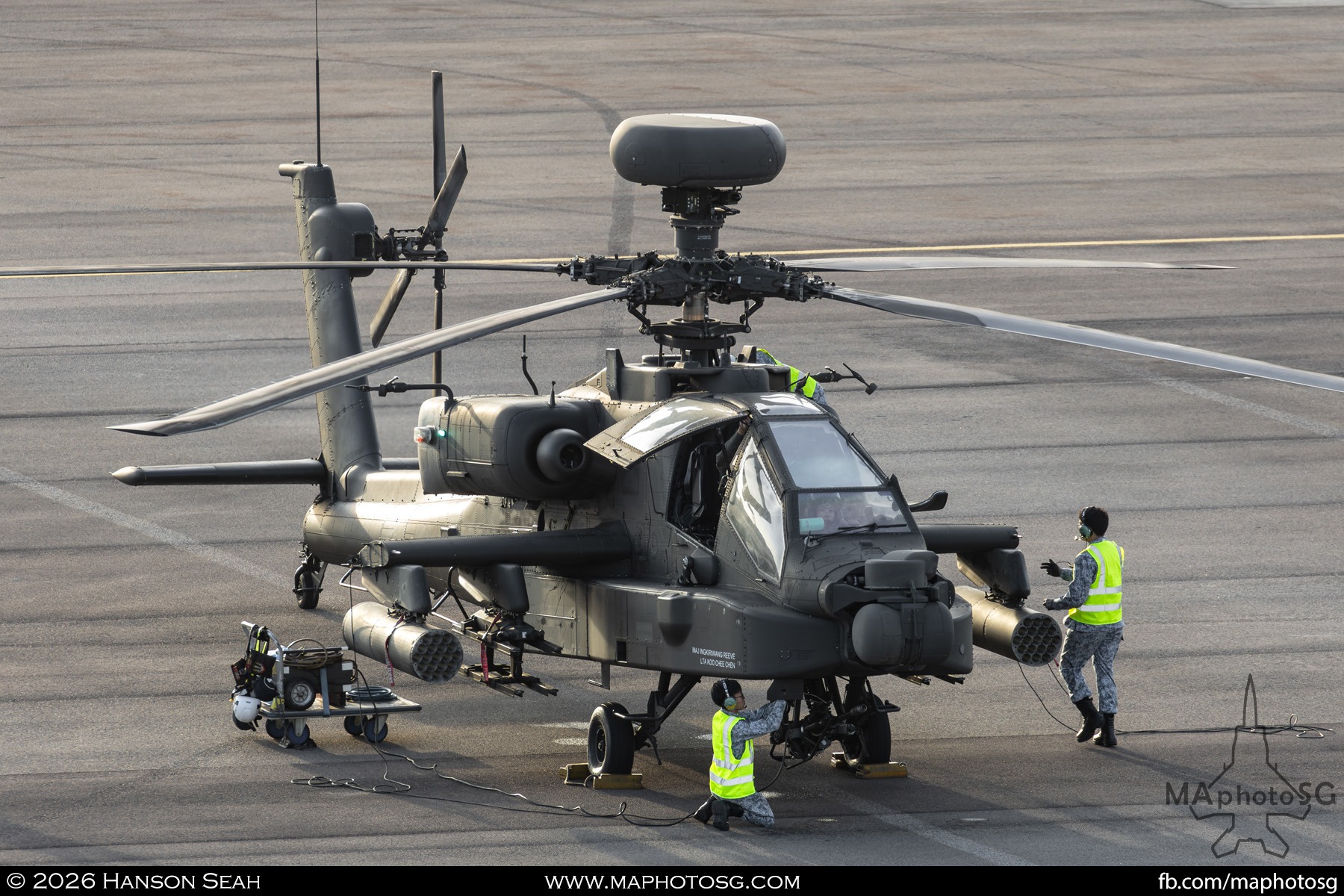
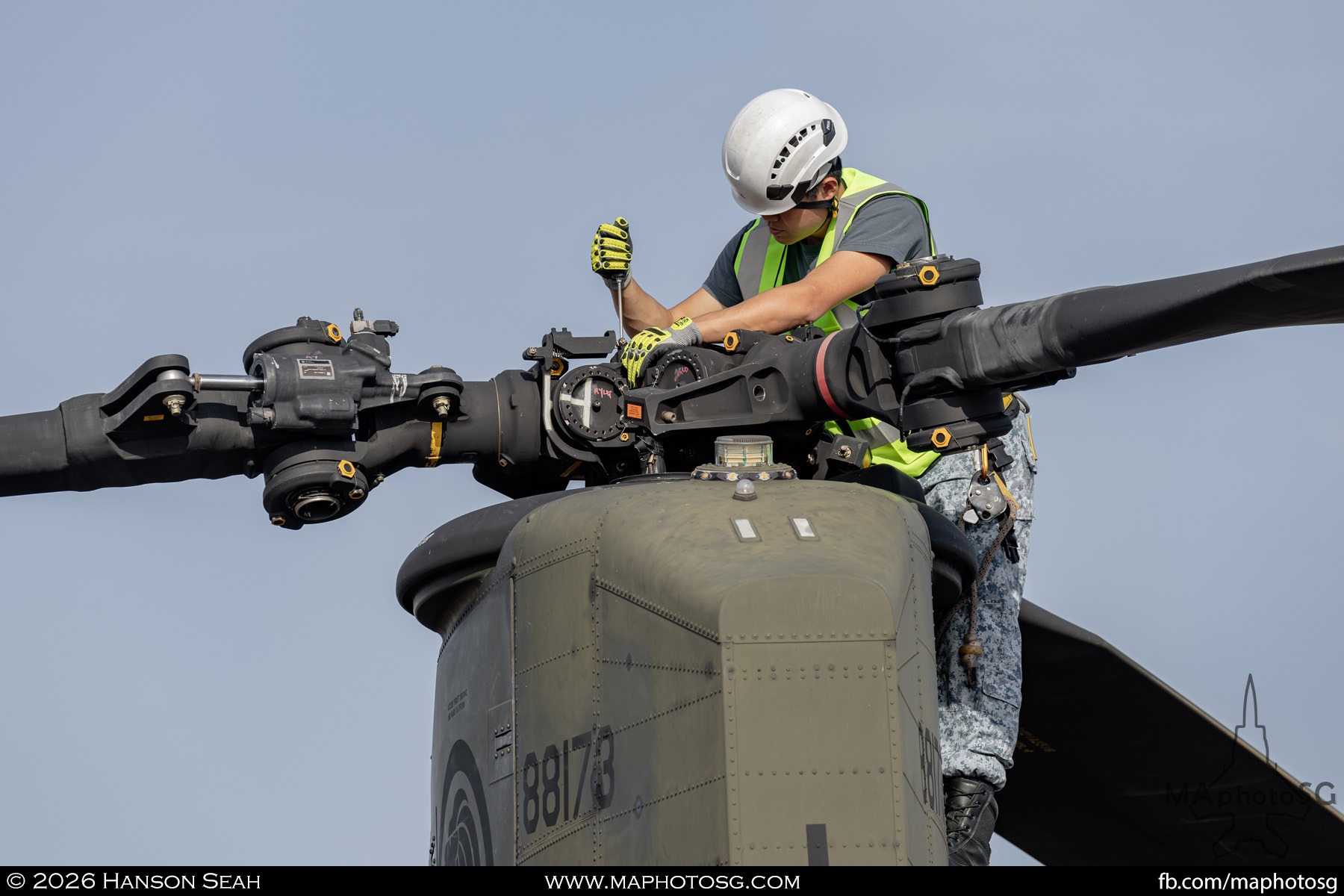
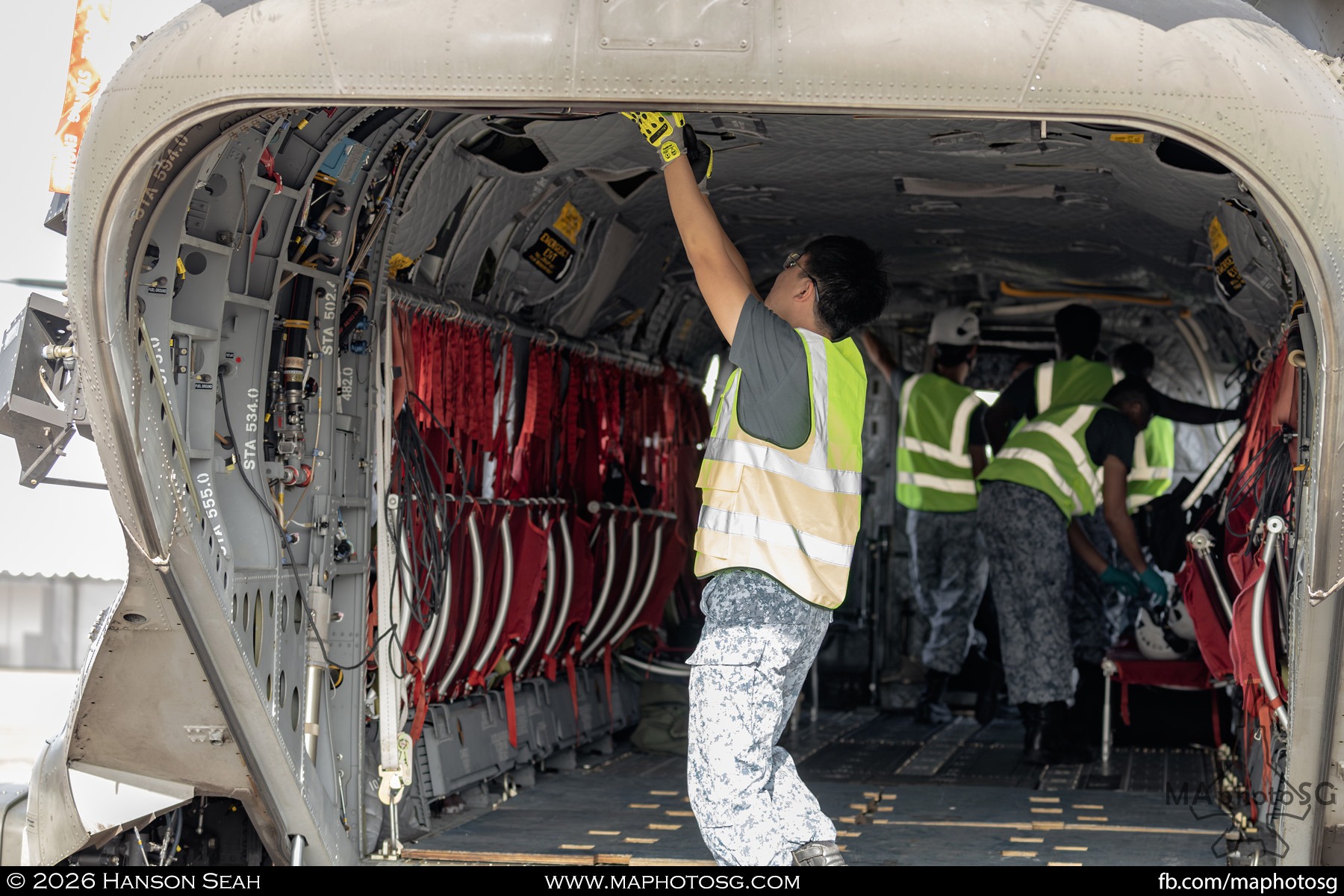
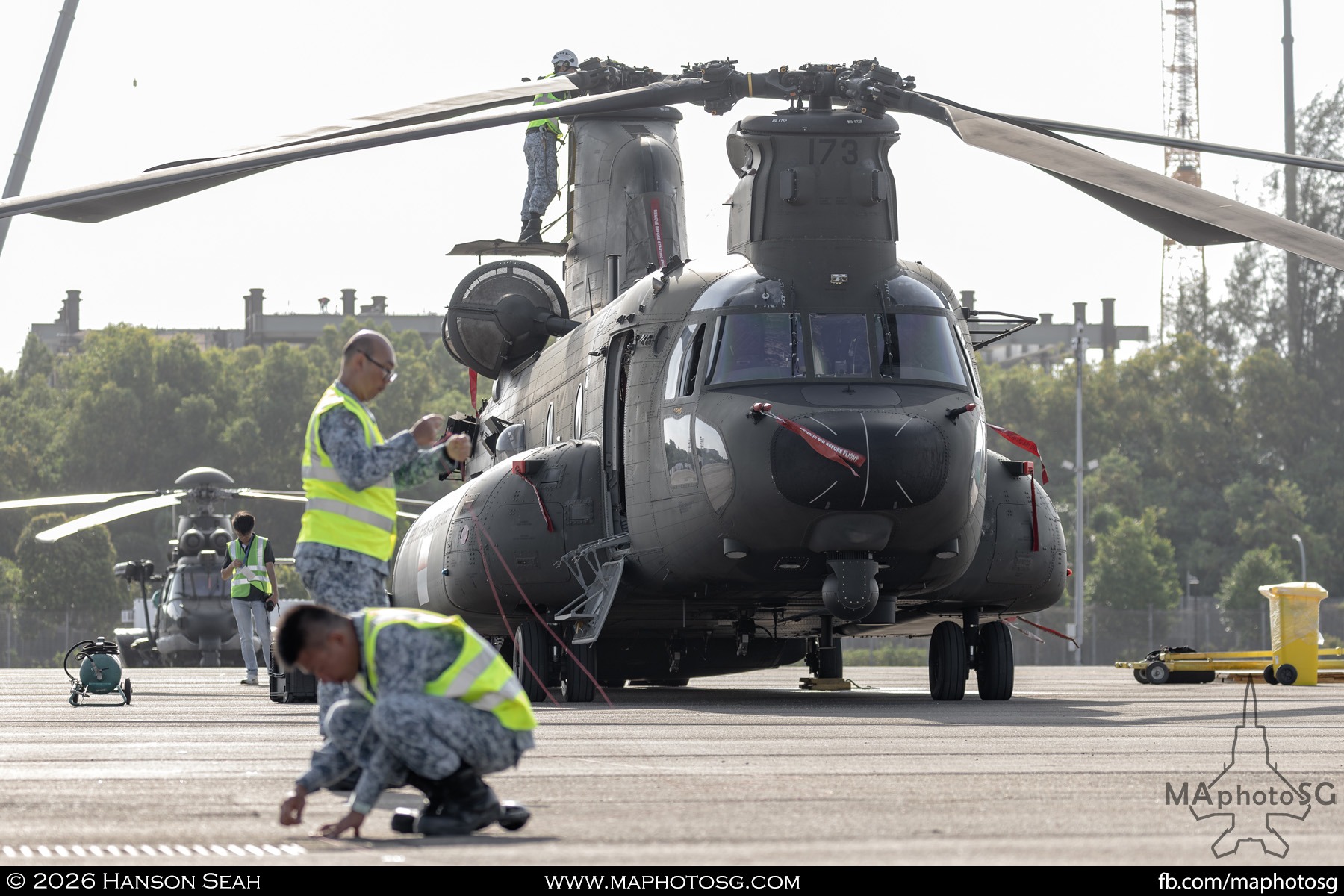
RSAF Air Force Engineers (AFEs) working on their respective airframes, making final touches to ready the aircraft for static display.
AFEs laying position boxes and reference lines that would later guide static assets during the night towing operation.
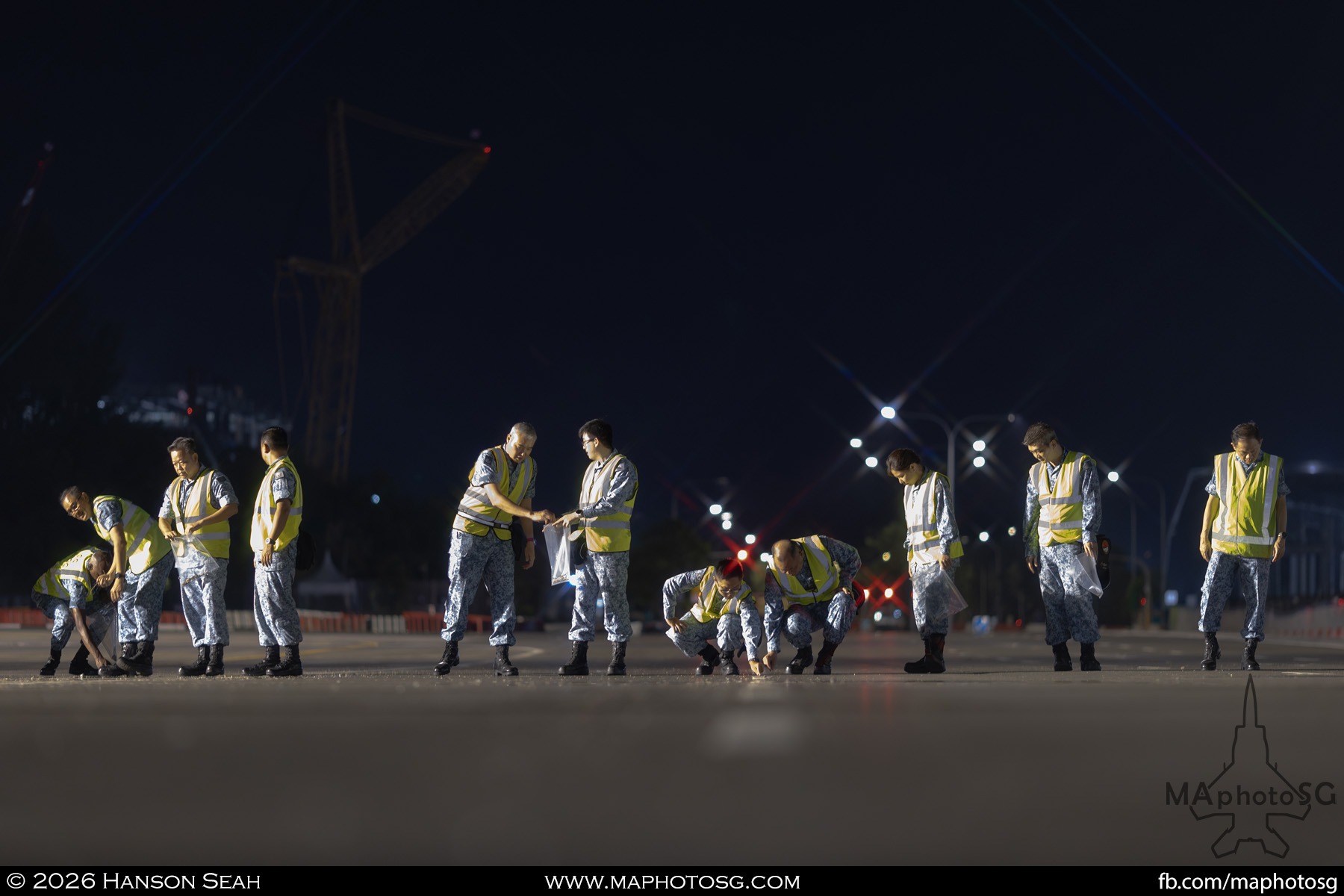
AFEs conducting a FOD walk along Aviation Park Road.
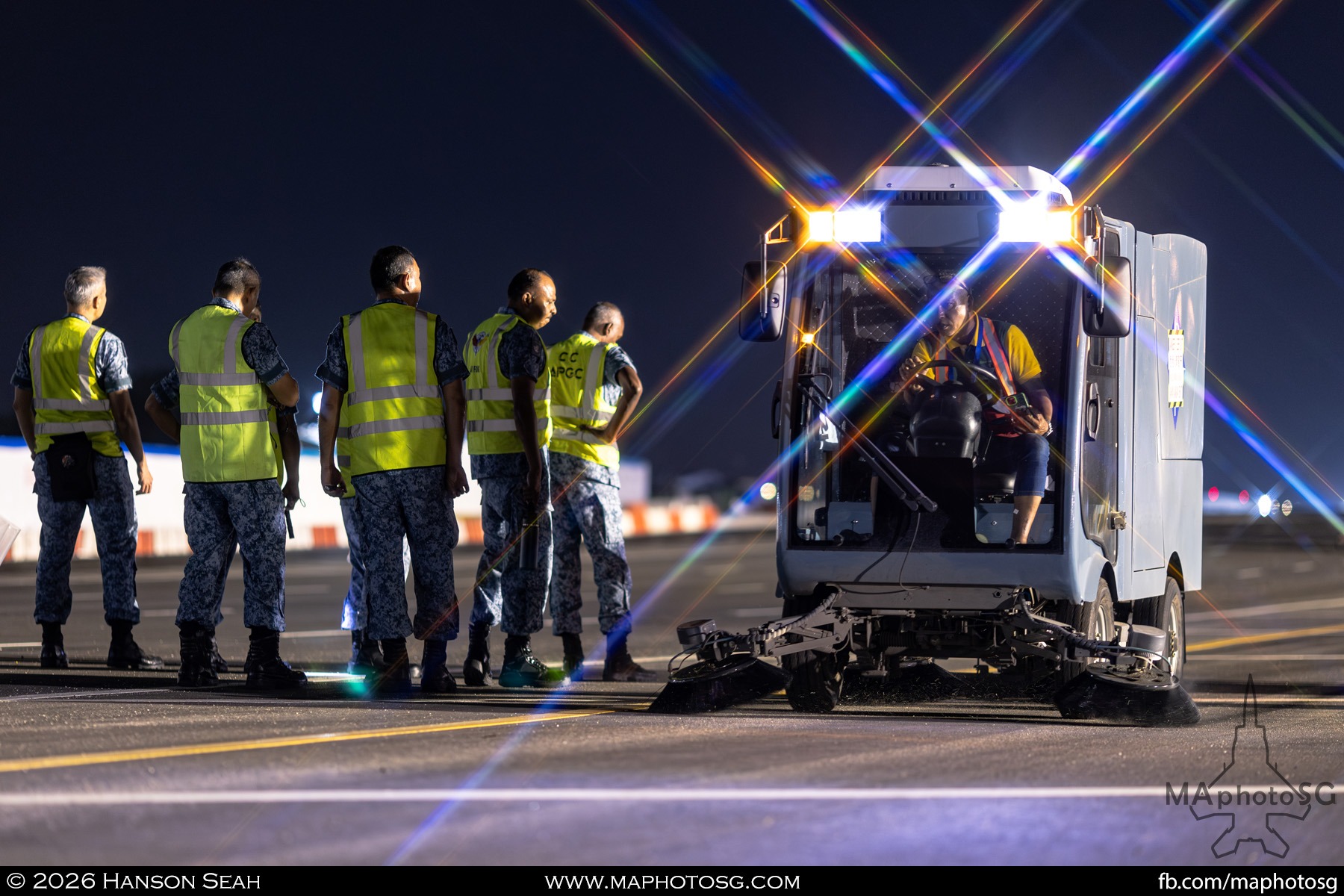
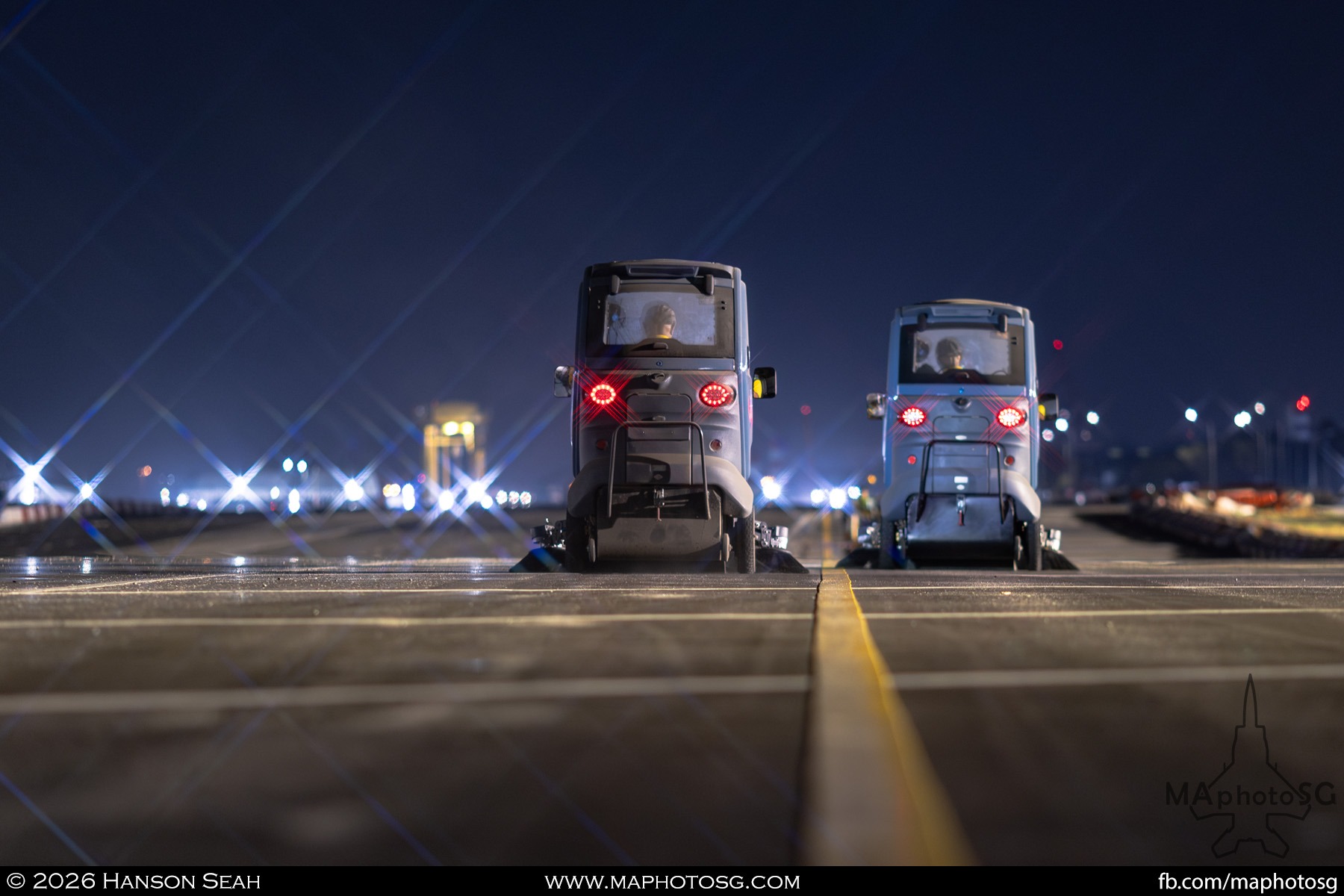
Sweepers making multiple runs to ensure the 25-metre-wide public road is spotless by the end of the FOD inspection.
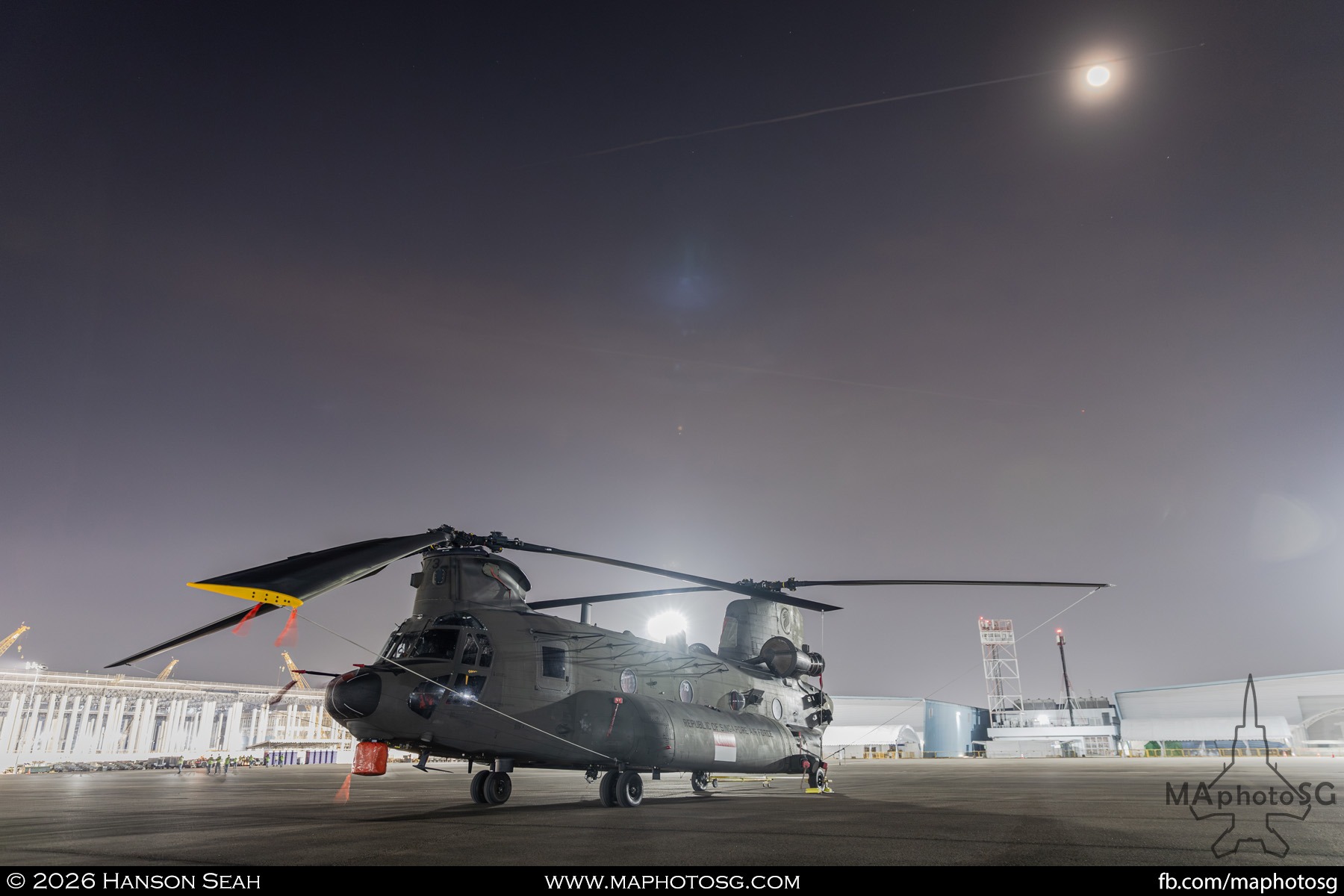
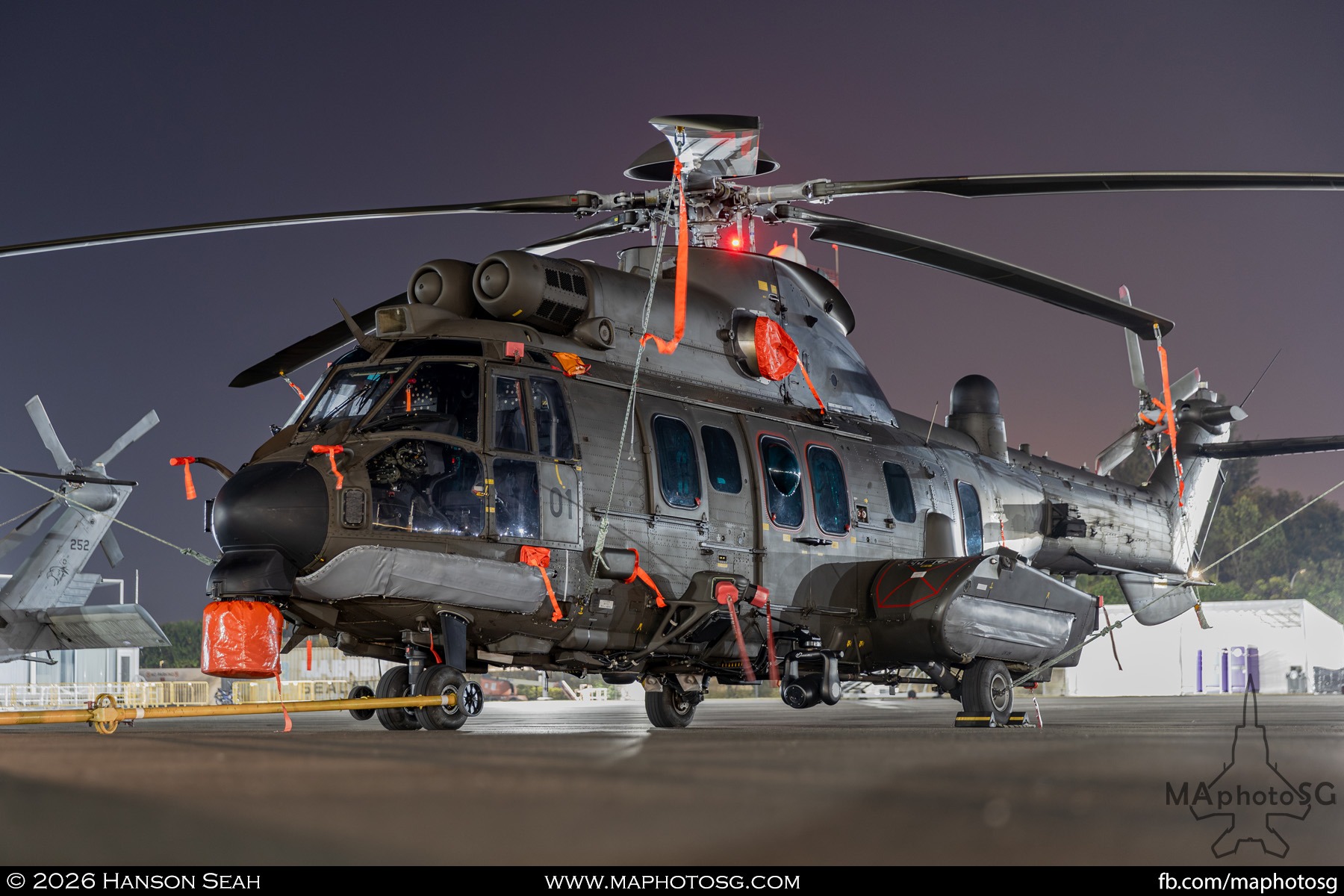
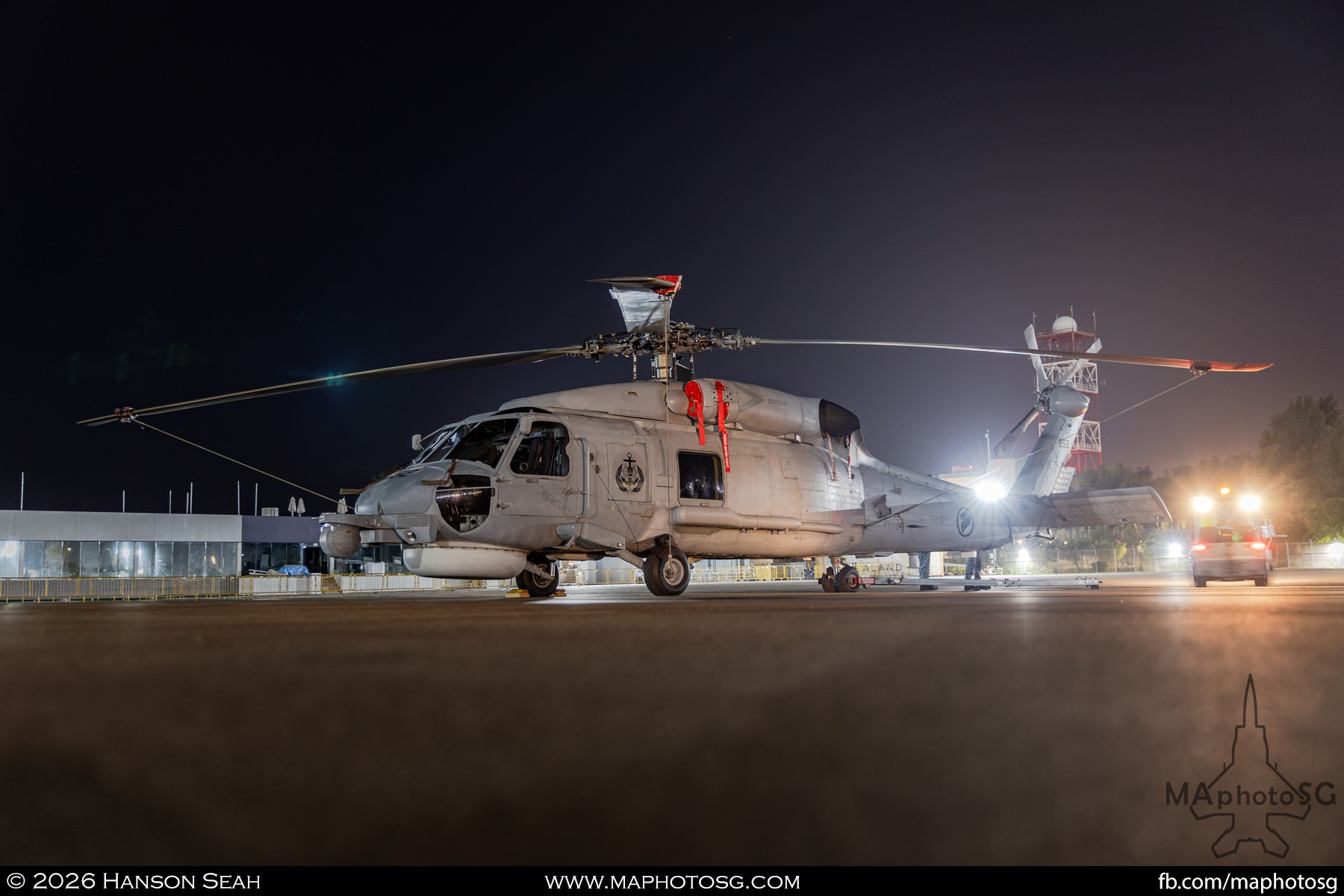
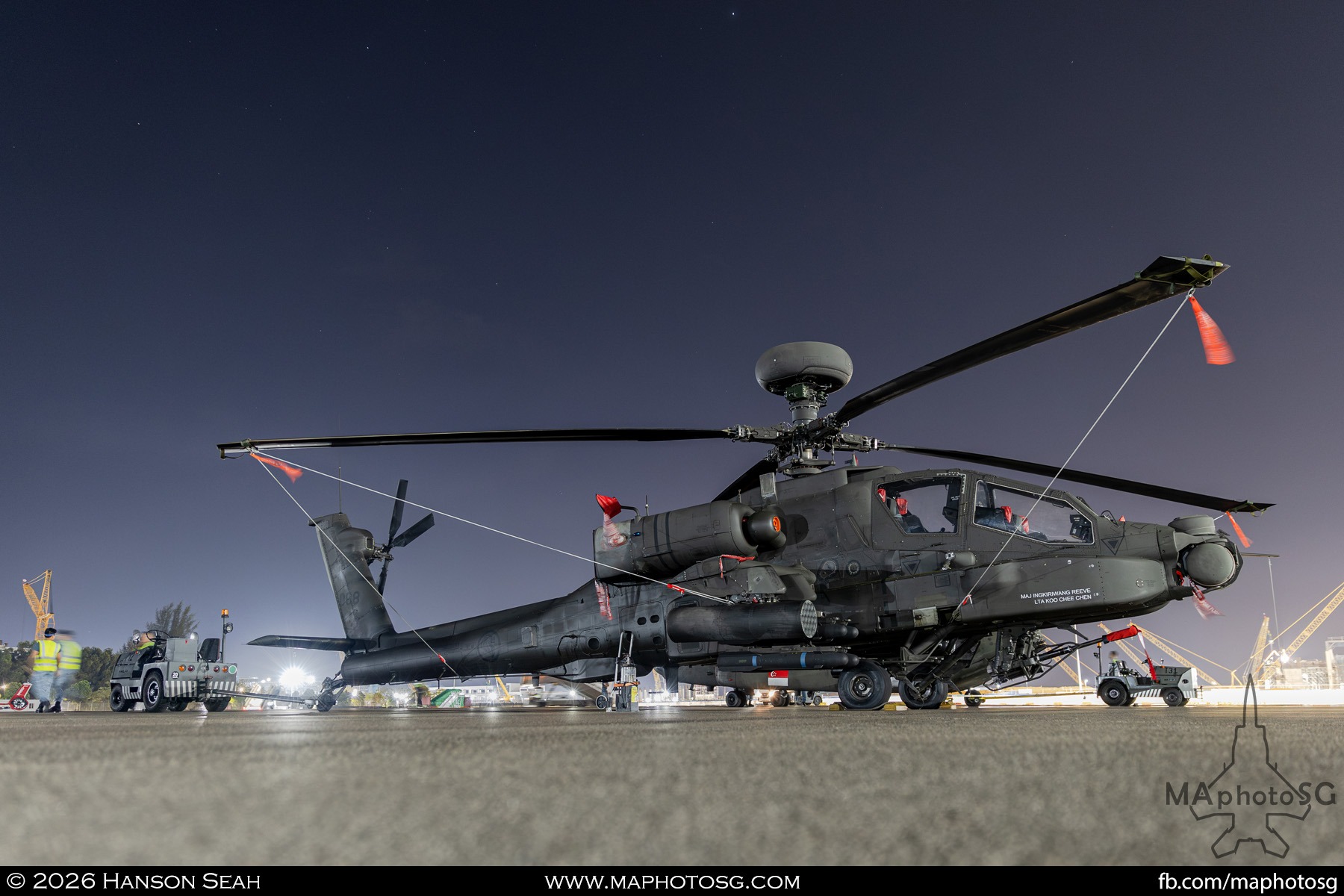
RSAF rotary-wing assets shimmering under the moonlight.
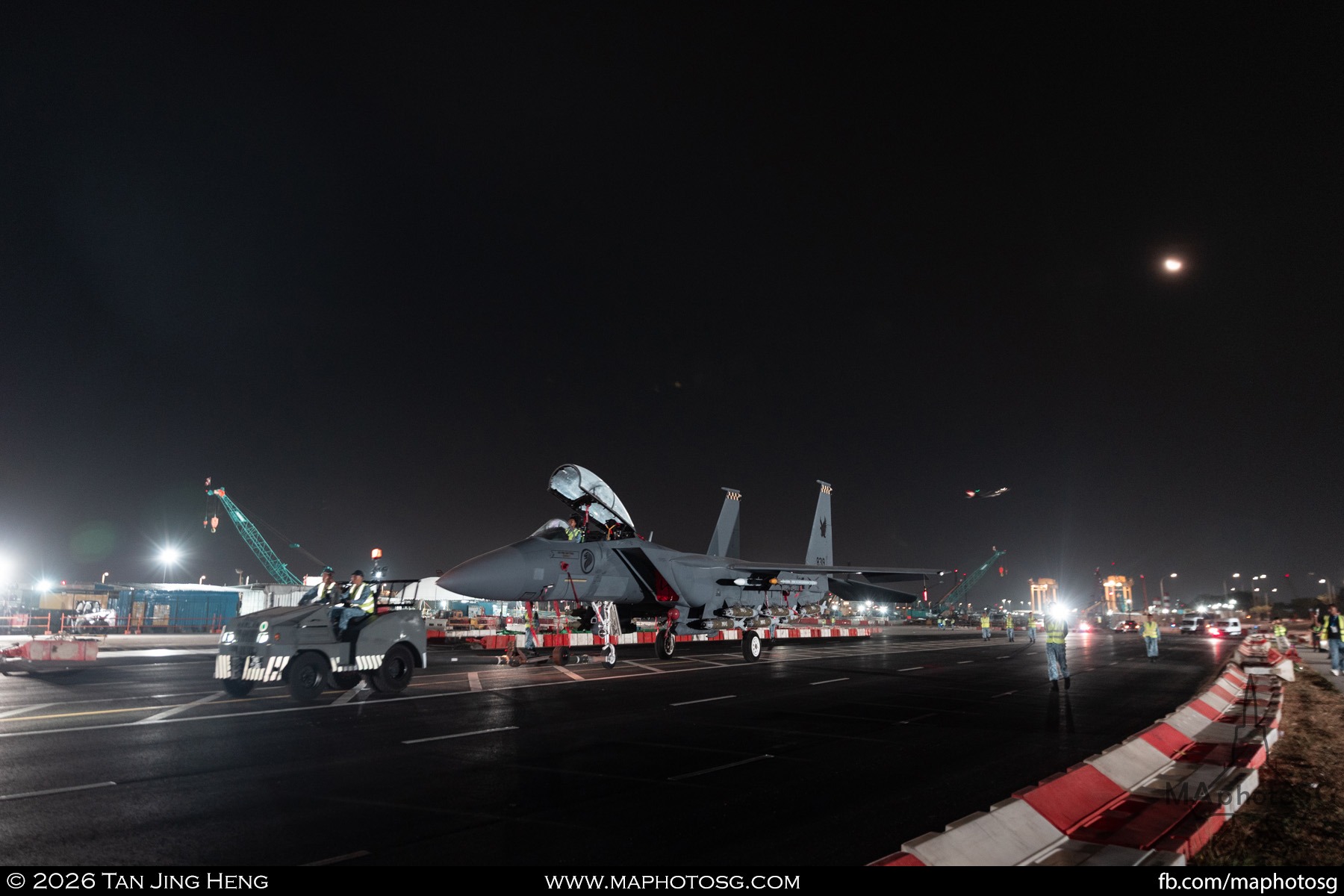
The towing operation commences, with the F-15SG leading the way at a pace of 5 km/h.
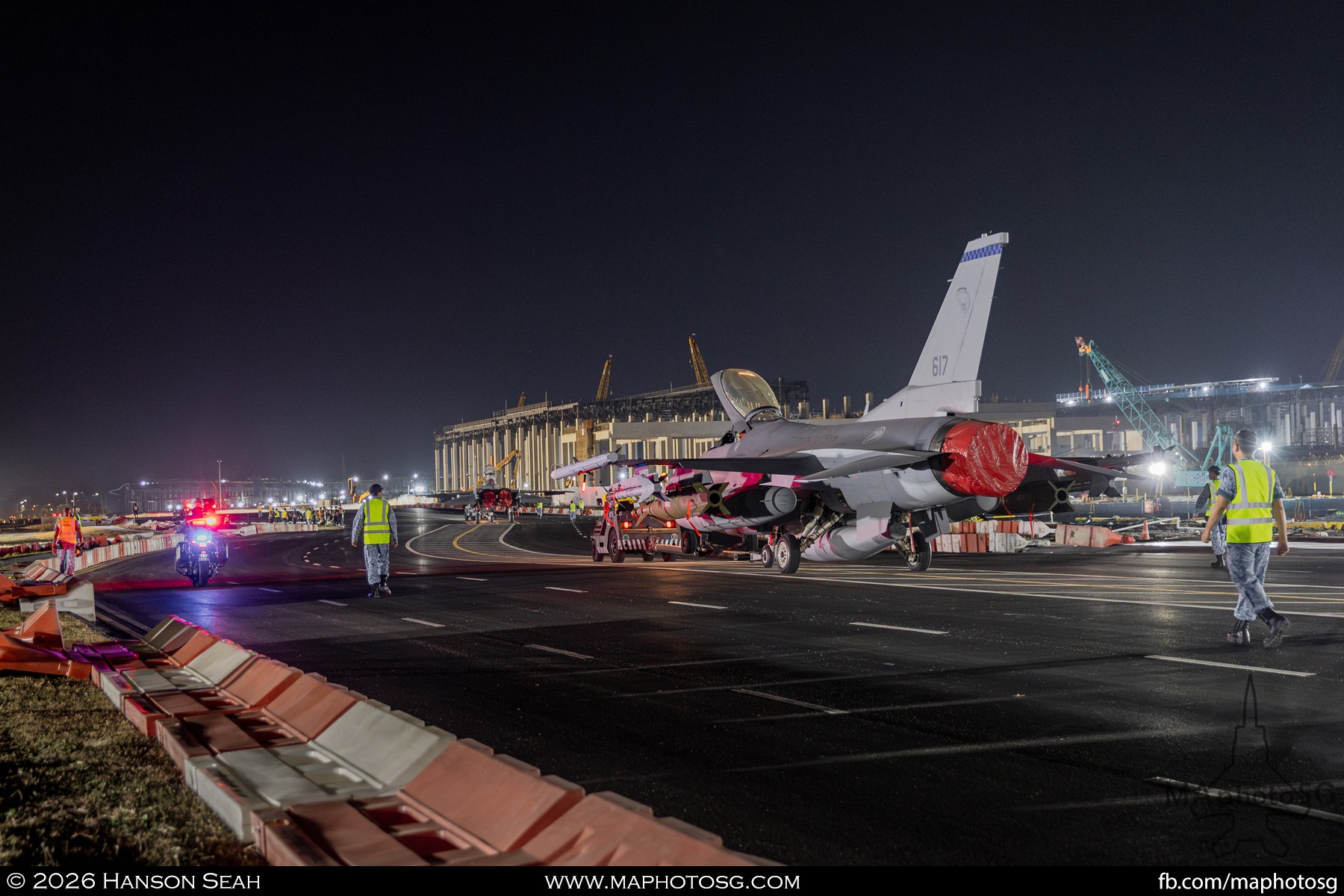
The convoy is flanked by RSAF personnel acting as “wing walkers”, along with security escorts on motorcycles.
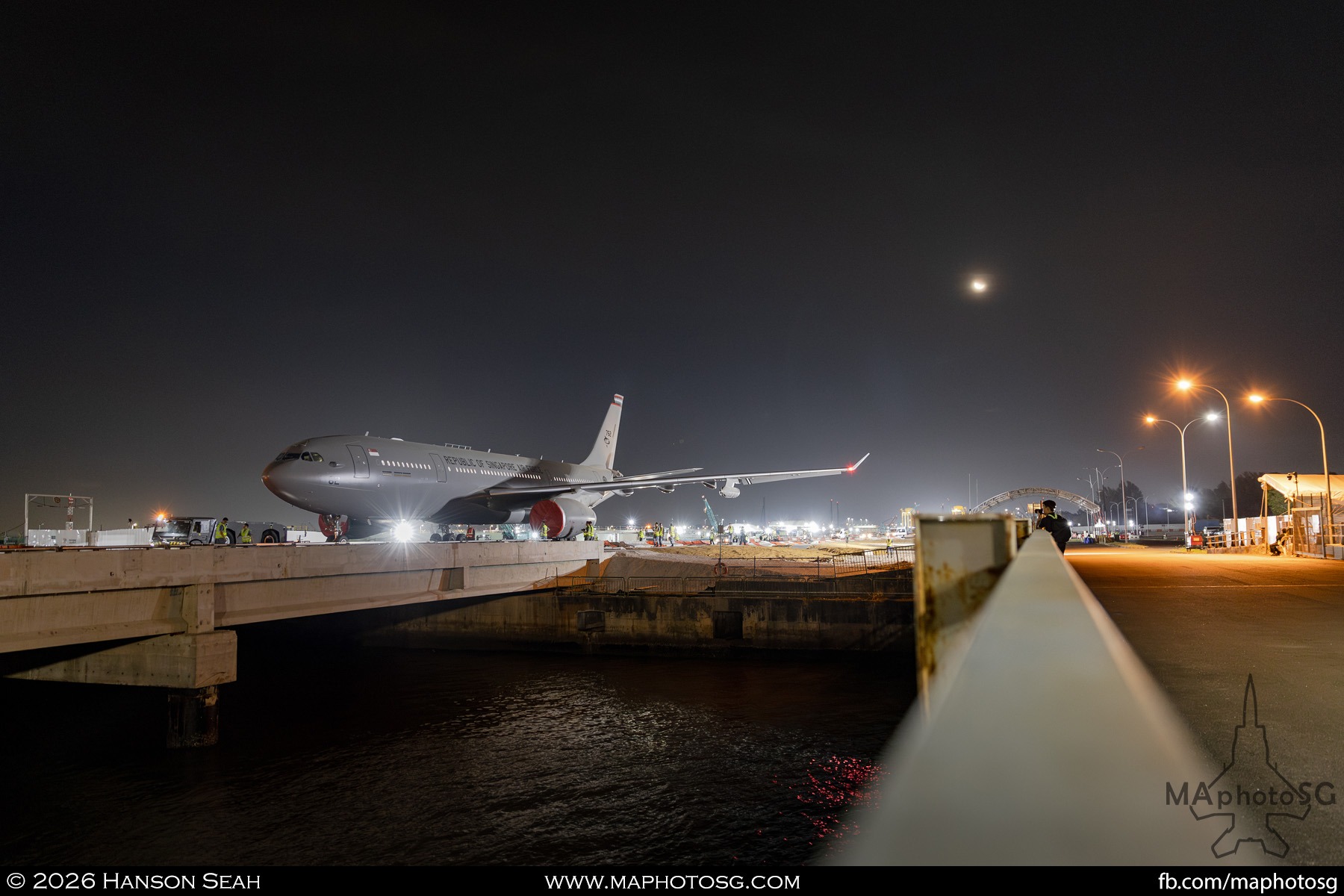
The A330 MRTT reaches the most challenging part of the towing route, crossing a bridge with just sufficient clearance between its engines and the guardrails.
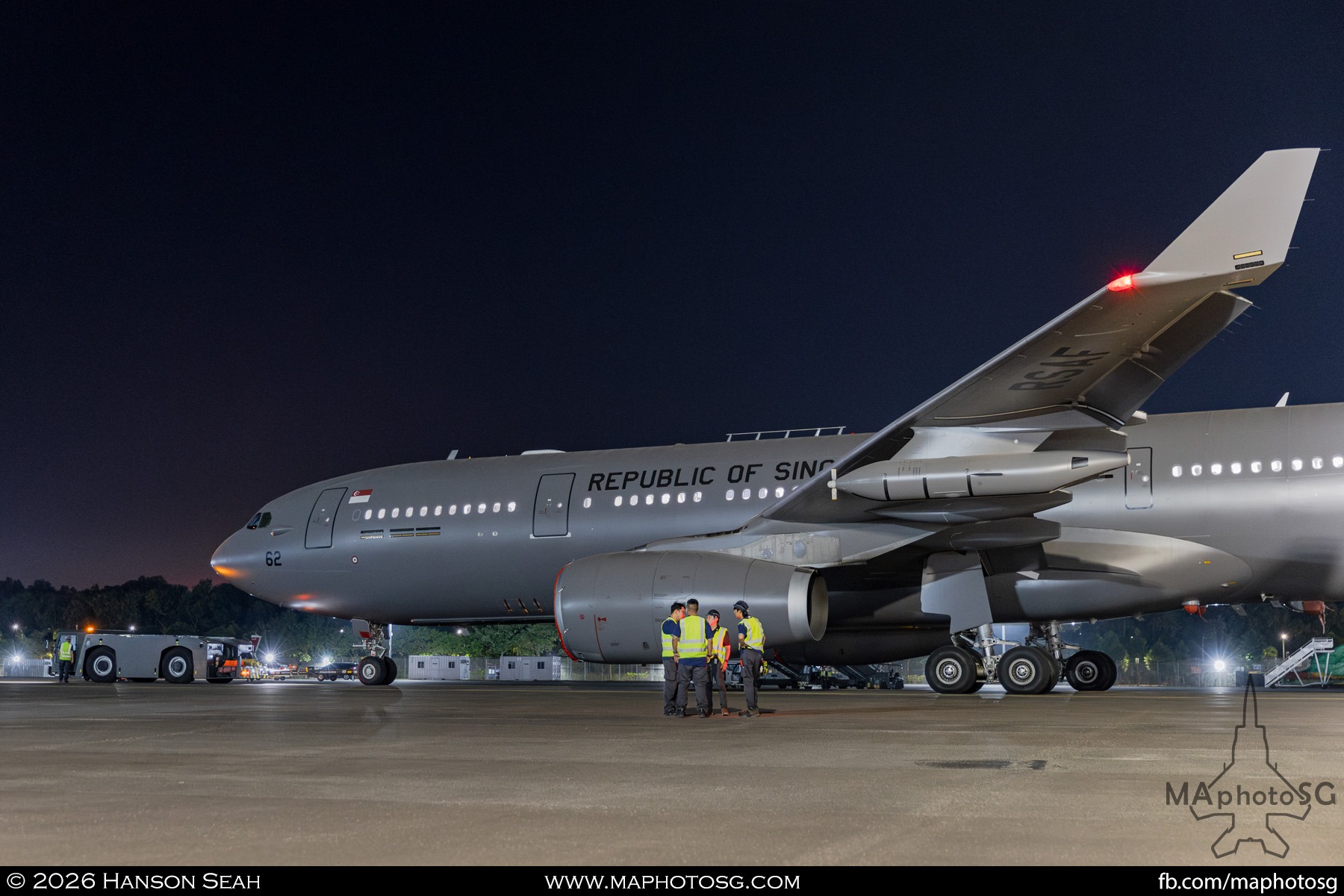
Ground personnel conducting a briefing for the next phase of operations after the convoy reaches the Changi Exhibition Centre.
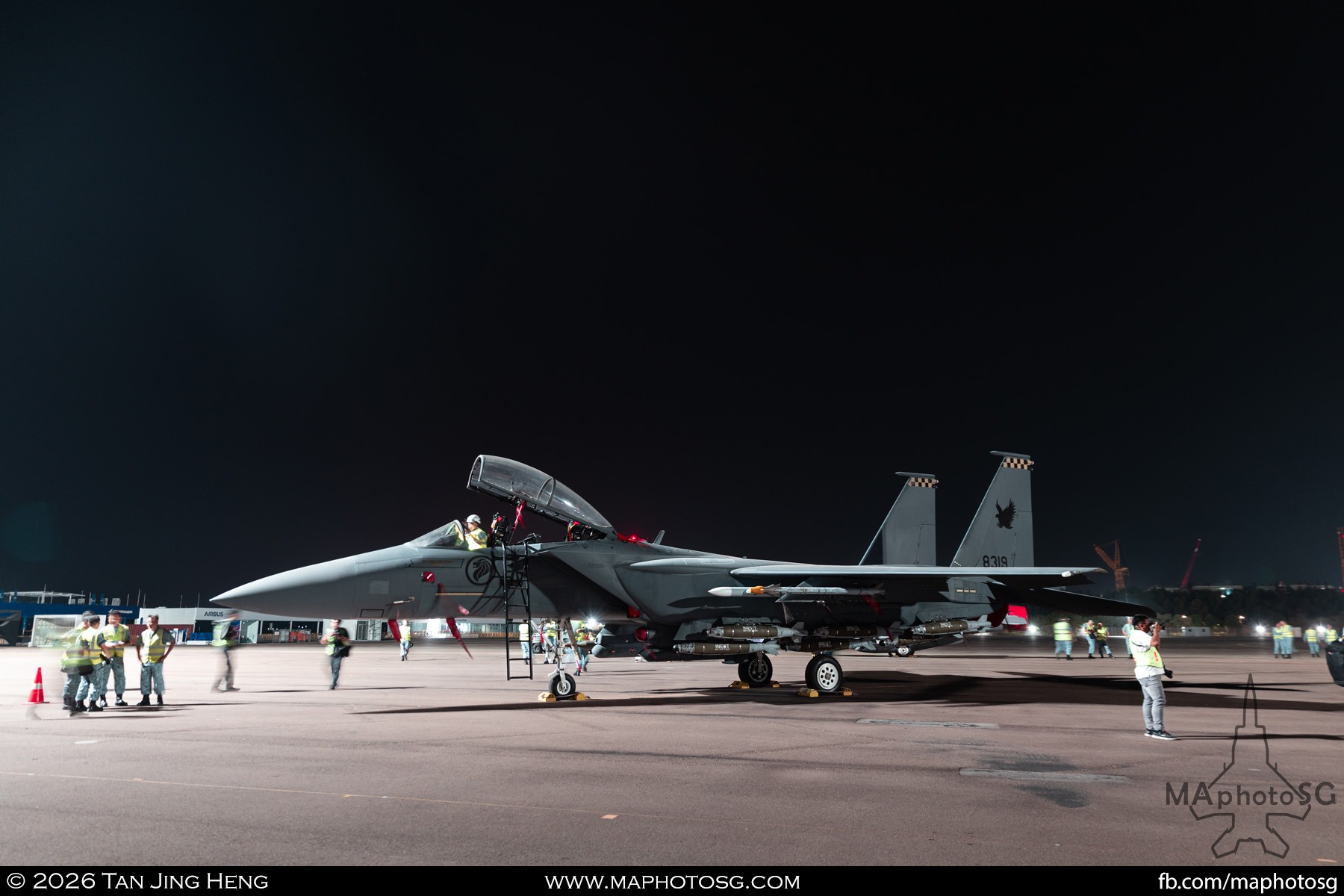
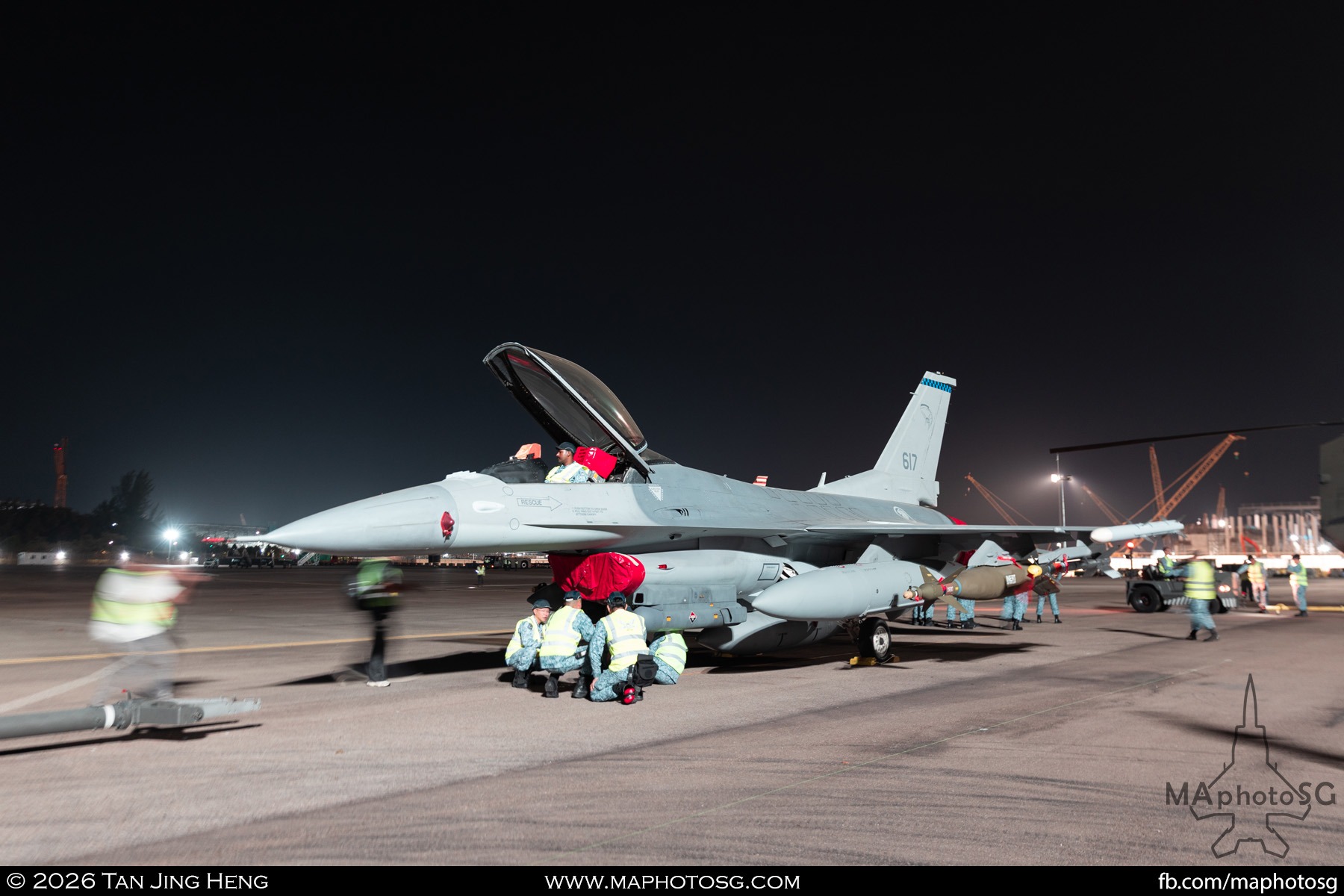
The well-choreographed operation of “Tetris” begins, as fighter aircraft are first towed into their final static display positions.
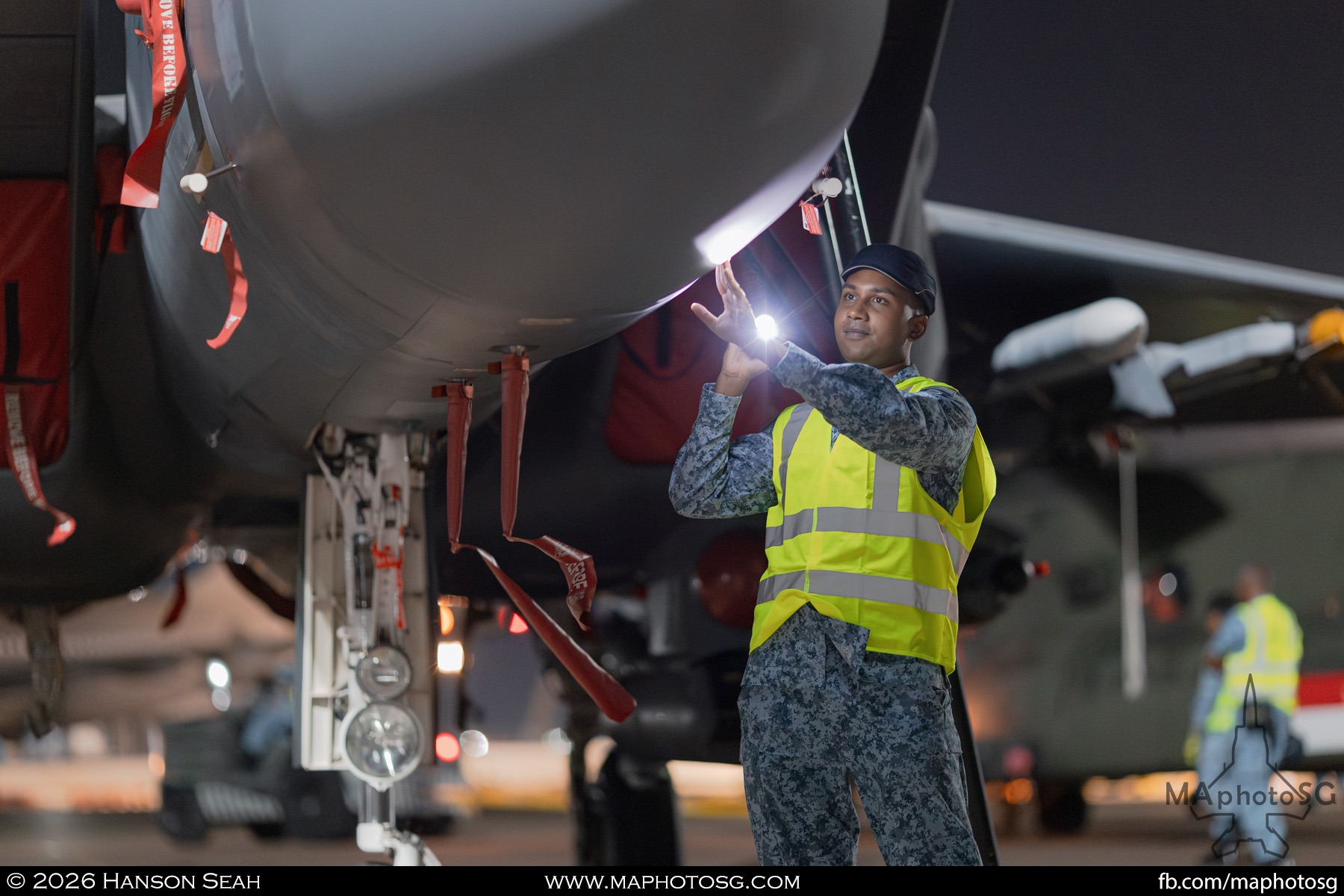
With chocks in place, an RSAF AFE performs a quick inspection of the F-15SG.
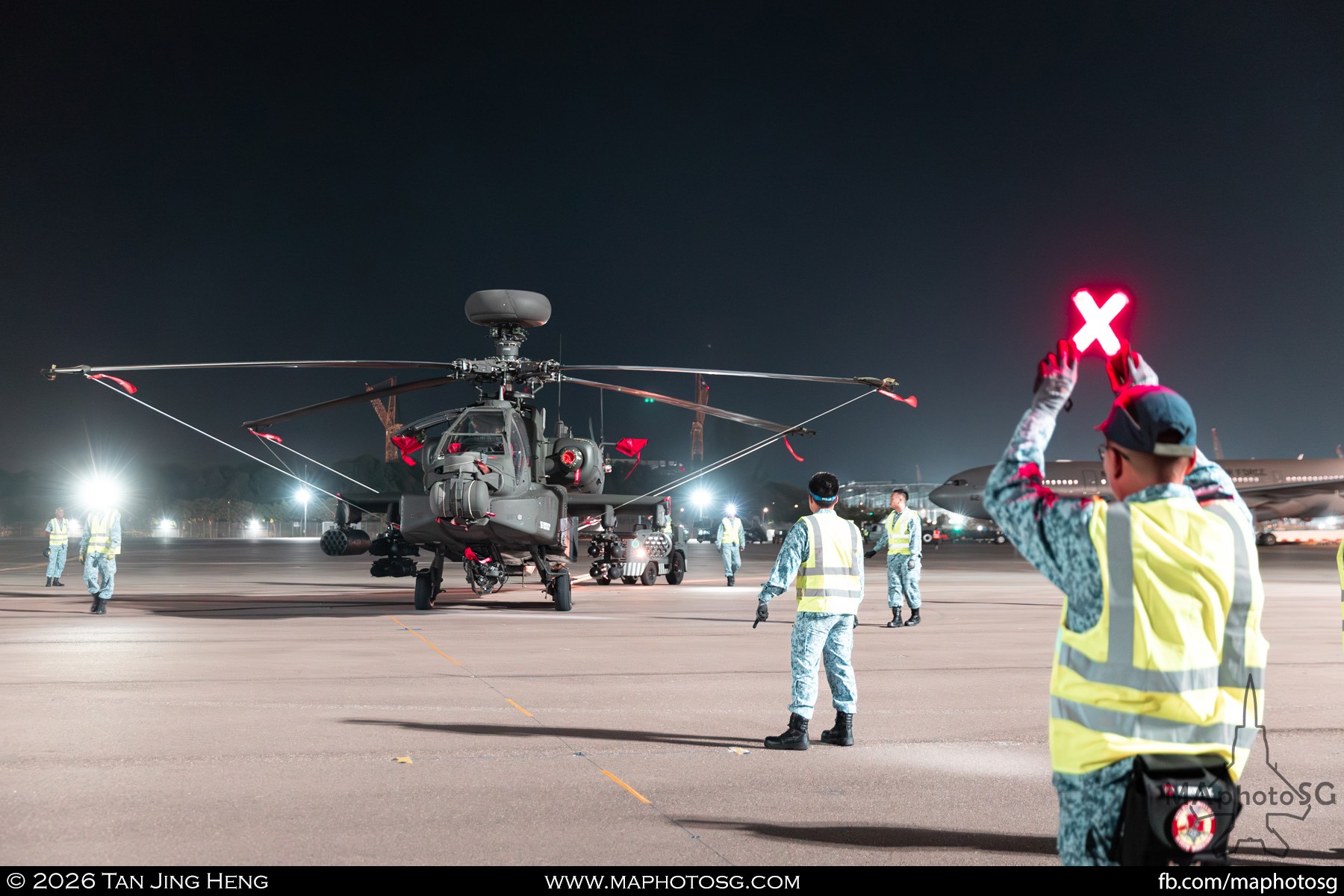
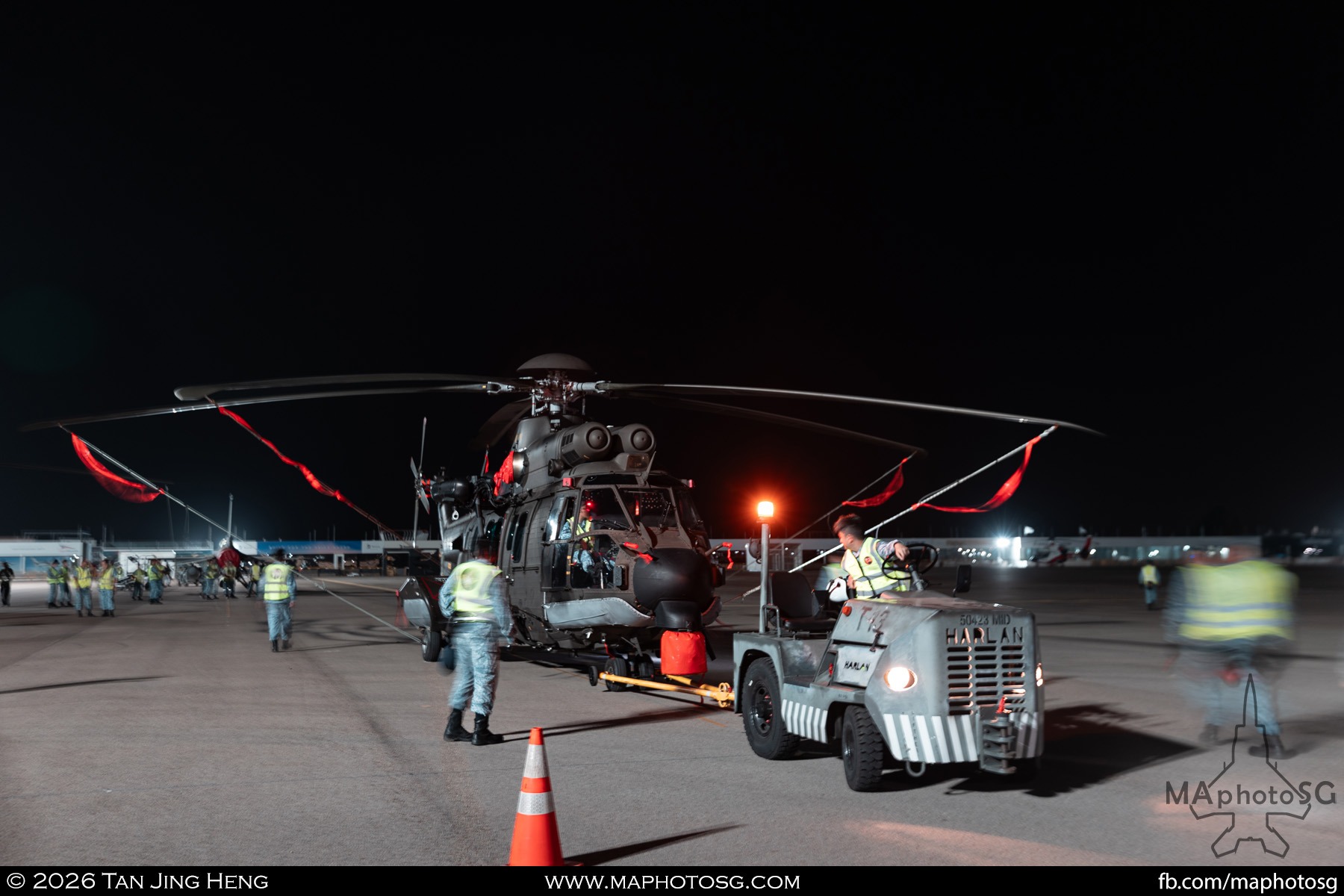
Next, the rotary-wing assets are carefully marshalled into their positions.
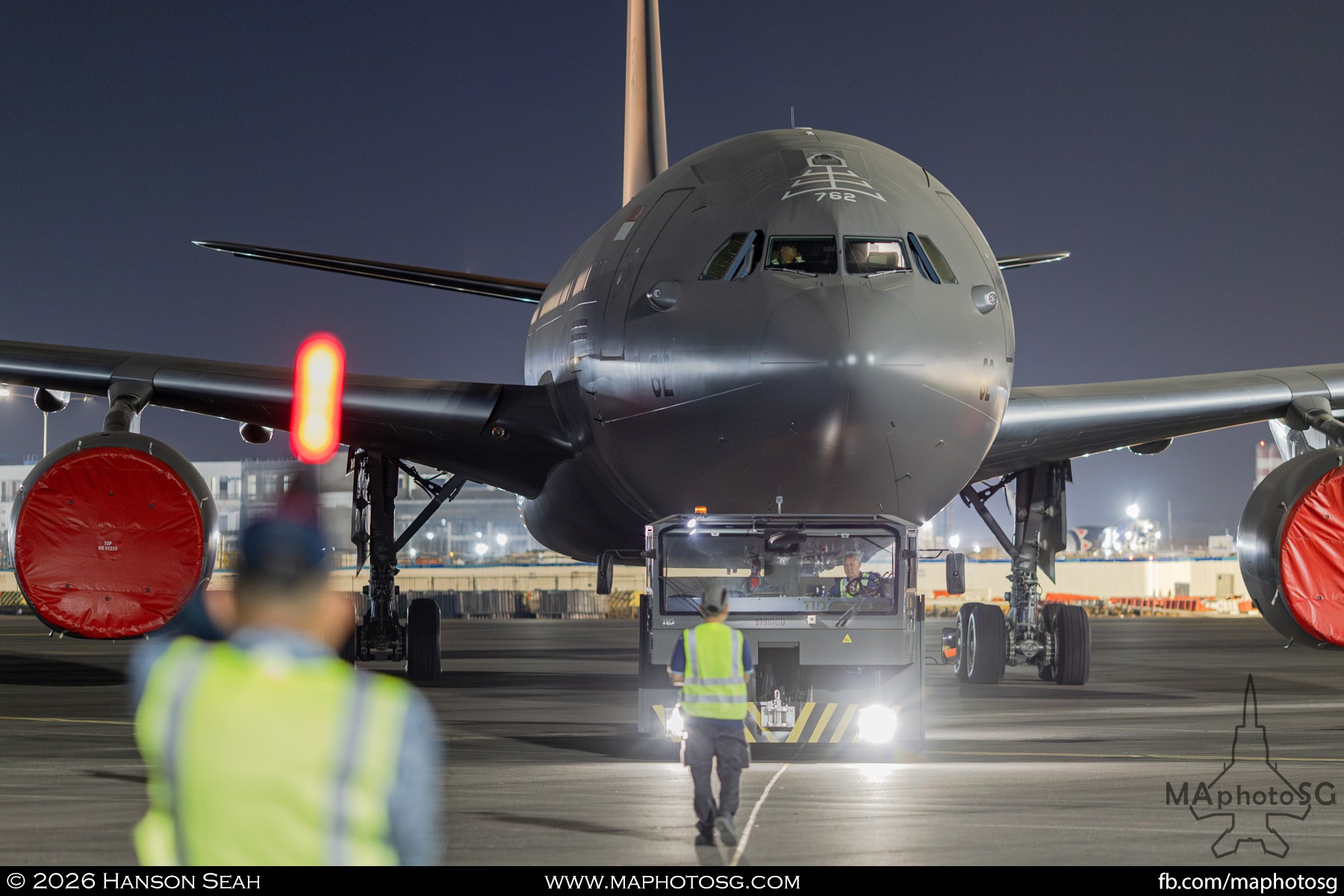
Finally, the massive A330 MRTT is carefully marshalled into the SADA.
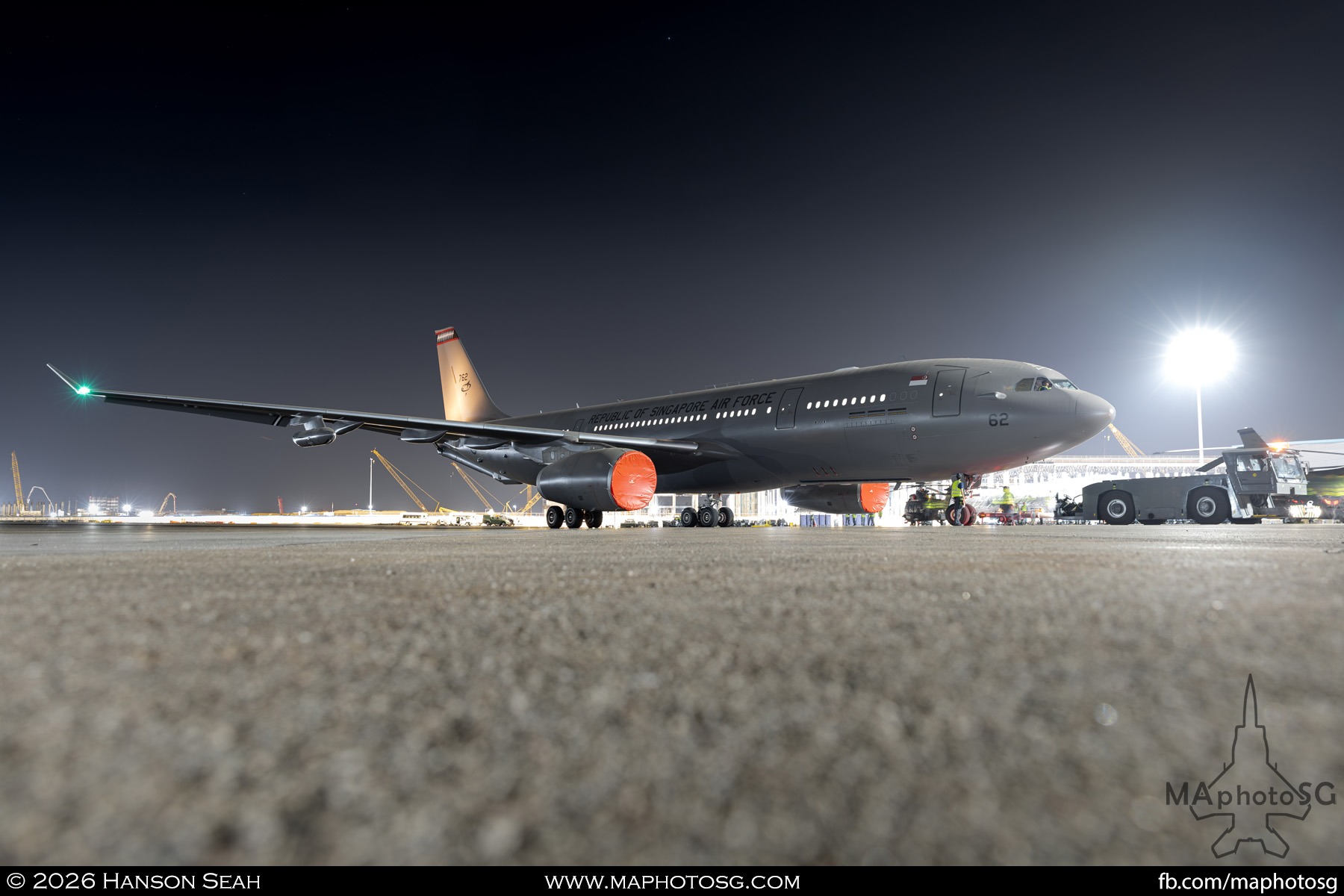
As the aircraft with one of the largest wingspans on display, the A330 MRTT must be precisely positioned—not only to serve as the centrepiece of the RSAF display, but also to ensure sufficient clearance for the towing of foreign static display aircraft in the days that follow.
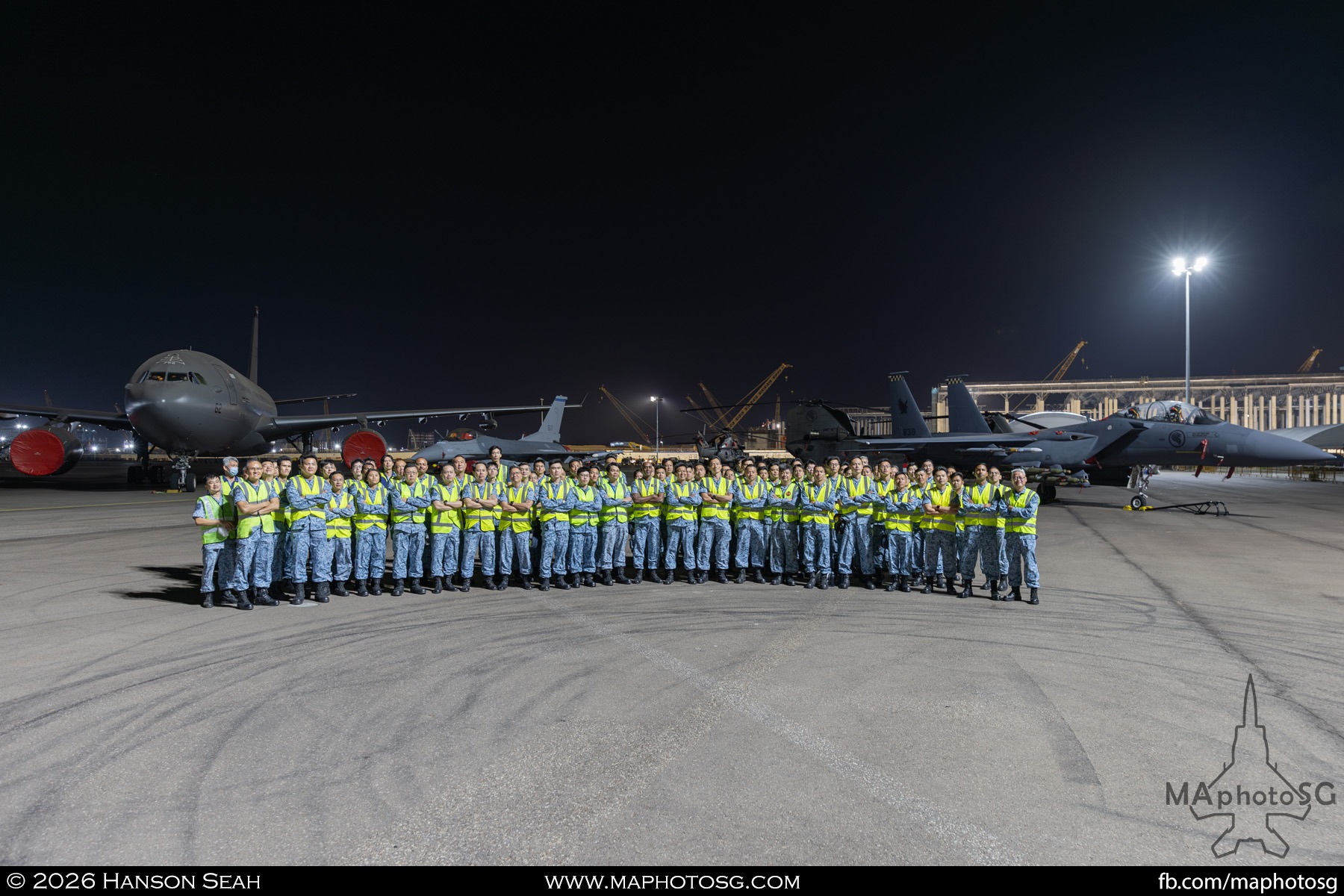
RSAF servicemen and women gather for a group photo after the conclusion of a long but productive day’s work.